The Milky Way galaxy is a barred spiral galaxy that contains an estimated 100 billion to 400 billion stars. While it is impossible to accurately count the exact number of stars in the Milky Way, scientists have estimated that there are likely between 100 billion and 400 billion stars, with a more recent estimate putting the number at around 250 billion stars.
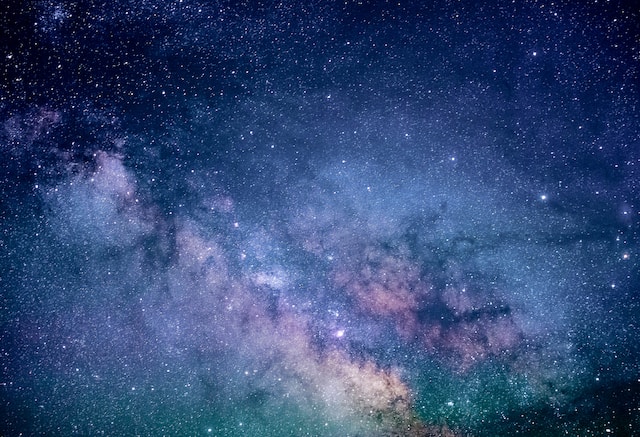
Of these stars, it is estimated that only about 1% are similar in size and brightness to our Sun. This means that there are likely between 1 billion and 4 billion stars similar to our Sun in the Milky Way galaxy.
It’s important to note that while the Milky Way is home to a vast number of stars, it is not the only galaxy in the universe. In fact, there are estimated to be billions of galaxies in the observable universe, each with their own stars, planets, and other celestial bodies.
It’s also worth noting that the Milky Way is constantly evolving, with new stars being born and others dying out. While the number of stars in the Milky Way is estimated to be in the range of 100 billion to 400 billion, this number is not fixed and may change over time.
In addition to stars, the Milky Way also contains other celestial bodies such as planets, moons, asteroids, and comets. In recent years, astronomers have discovered thousands of exoplanets orbiting stars in our galaxy, raising the possibility that some of these planets may be capable of supporting life.
The study of the Milky Way and other galaxies is an important field of research in astronomy and astrophysics. By studying the properties and behavior of stars and other celestial bodies, scientists can learn more about the structure and evolution of galaxies, as well as the fundamental laws of the universe.
In conclusion, while it is difficult to accurately count the number of stars in the Milky Way, it is estimated that there are between 100 billion and 400 billion stars in our galaxy, with around 1% of those being similar in size and brightness to our Sun. The study of the Milky Way and other galaxies is an important field of research that can provide valuable insights into the structure and evolution of the universe.