The voltage in a typical household wall outlet varies depending on the country or region you are in. In the United States, Canada, and many other countries in the Americas, the voltage in a standard wall outlet is 120 volts AC (alternating current). In Europe, Asia, Africa, and most other parts of the world, the standard voltage is 220-240 volts AC.
The reason for the difference in voltage standards between countries is largely historical. In the United States, for example, the first electrical systems were developed in the late 1800s and early 1900s using DC (direct current) power. However, AC power soon became the dominant form of electrical power, and by the 1920s, the standard voltage for household power in the United States had been set at 120 volts.
In Europe, the development of electrical systems followed a different path. In the early 1900s, a number of European countries had already begun developing AC power systems, and the standard voltage was set at 220 volts. This voltage was later increased to 240 volts in some countries, such as the United Kingdom.
It is important to note that while the voltage in a standard wall outlet is fixed, the actual voltage that a device or appliance receives may vary depending on a number of factors. For example, the voltage may drop during periods of high electrical demand, or it may fluctuate due to factors such as the quality of the electrical wiring in a building or variations in the electrical grid.
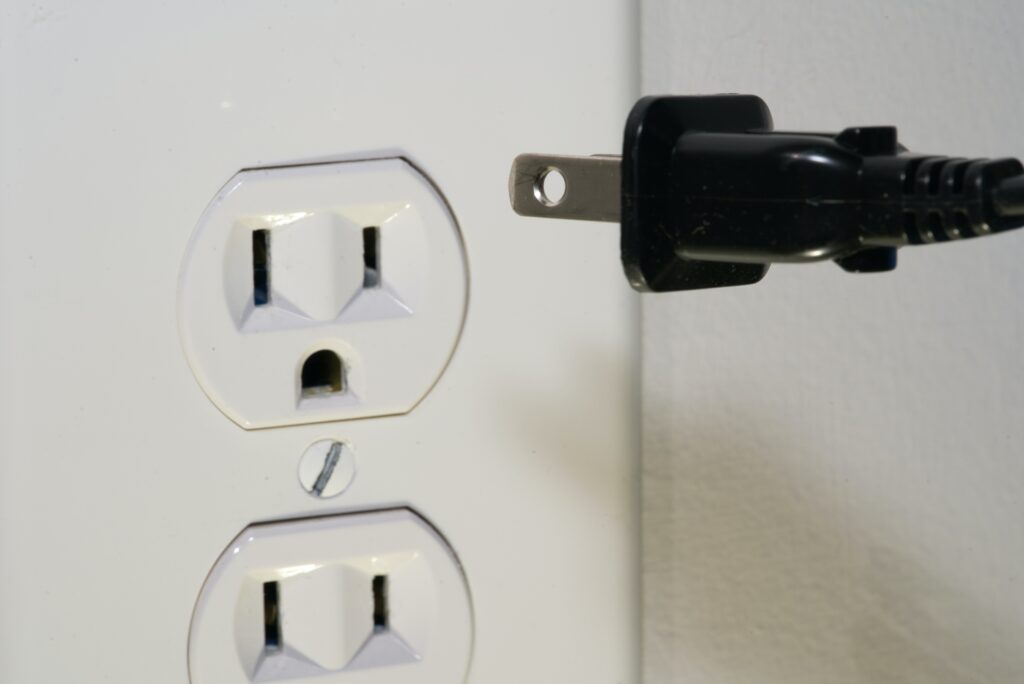
In addition to the standard voltage, wall outlets also have a number of other important specifications. For example, the number and type of electrical sockets in a given outlet may vary depending on the country or region. In the United States, for example, wall outlets typically have two or three sockets that are designed to accept standard electrical plugs. In some other countries, such as the United Kingdom, wall outlets may have different shapes and sizes to accommodate different types of plugs.
It is also important to note that wall outlets may be designed to handle different amounts of electrical current. In the United States, for example, standard household outlets are typically rated to handle a maximum current of 15 or 20 amps. In some other countries, such as those in Europe, outlets may be rated for higher current loads.
Finally, it is important to exercise caution when working with electrical outlets and appliances. Electrical shocks and fires can result from improper use or handling of electrical devices. If you are unsure about the voltage or other specifications of a wall outlet or appliance, it is best to consult with a qualified electrician or other professional.