Alaska, the largest state in the United States, is a unique and valuable part of the country. With its vast wilderness, abundant natural resources, and strategic location, it has long been an important region for exploration, trade, and economic development. The question of how much Alaska is worth today is a complex one, and depends on a variety of factors, including its economic output, natural resources, geopolitical significance, and cultural value.
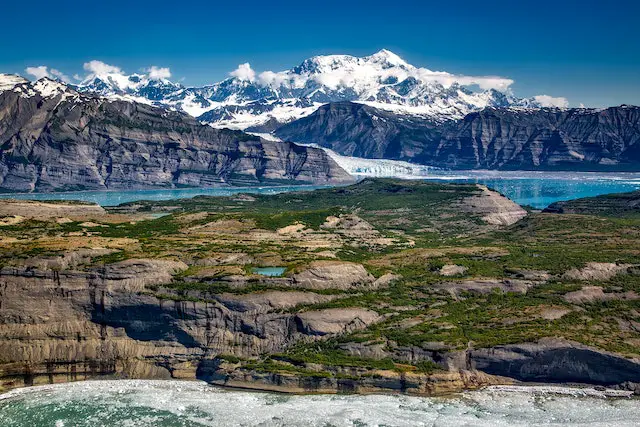
Economic Output One way to measure the value of Alaska is by its economic output. In 2020, Alaska’s Gross Domestic Product (GDP) was approximately $53 billion. This is a relatively small portion of the United States’ overall GDP, which was over $21 trillion in the same year. However, it is worth noting that Alaska’s economy is unique and diverse, with a mix of industries that are not found in other states, such as commercial fishing, tourism, and oil and gas extraction. These industries are critical to Alaska’s economy and provide significant value to the state.
Natural Resources Alaska is rich in natural resources, including oil, gas, minerals, and timber. These resources are estimated to be worth trillions of dollars, and have been a major driver of economic development in the state. In particular, the discovery of oil on the North Slope in the 1960s transformed Alaska’s economy and made it a major player in the global energy market. Today, oil and gas extraction is still a significant part of Alaska’s economy, with companies like BP, ConocoPhillips, and ExxonMobil operating in the state.
Geopolitical Significance Alaska’s strategic location also makes it a valuable part of the United States. It is located at the crossroads of North America and Asia, and is bordered by Russia and Canada. As a result, it has long been a key region for military and strategic operations. During the Cold War, Alaska was home to numerous military bases and played a critical role in the defense of the United States. Today, it continues to be an important part of the country’s national security strategy, with bases like Joint Base Elmendorf-Richardson and Eielson Air Force Base hosting thousands of military personnel.
Cultural Value Finally, it is worth considering the cultural value of Alaska. The state is home to numerous indigenous communities, each with its own unique traditions, languages, and customs. These communities have a deep connection to the land and have been stewards of Alaska’s natural resources for thousands of years. Additionally, Alaska’s rugged and remote wilderness is a draw for outdoor enthusiasts from around the world, who come to hike, fish, hunt, and explore the state’s vast wilderness areas.
In conclusion, the question of how much Alaska is worth today is a complex one that cannot be answered with a simple number. While its economic output is relatively small compared to the rest of the United States, its natural resources, strategic location, and cultural value make it a valuable and unique part of the country. Ultimately, the true value of Alaska is incalculable, as it is a place that is both economically important and culturally significant, and its value extends far beyond any monetary measure