The inheritance of eye color is a complex trait that is influenced by multiple genes. The color of an individual’s eyes is determined by the amount and type of pigment in the iris, which is the colored part of the eye. There are two types of pigment that contribute to eye color: melanin, which produces brown, black, and hazel eyes, and lipochrome, which produces green, blue, and gray eyes. The more melanin present, the darker the eye color.
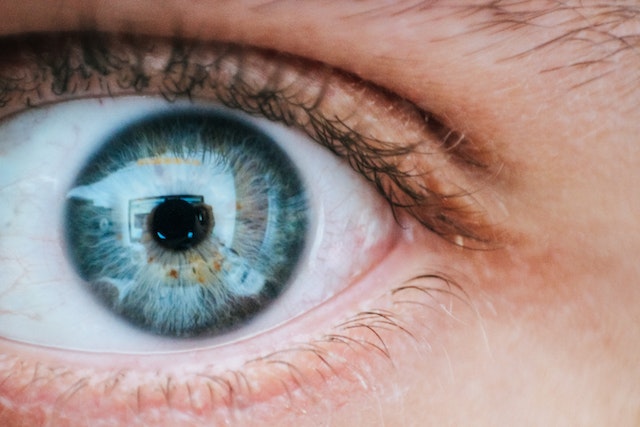
The inheritance of eye color is not well understood, but it is generally believed to be controlled by several genes, each of which contributes to the final eye color phenotype. In particular, two genes are thought to be important for determining eye color: OCA2 and HERC2. The OCA2 gene is involved in the production and storage of melanin in the iris, while the HERC2 gene regulates the activity of the OCA2 gene.
Eye color inheritance is a complex process, and the inheritance patterns are not always straightforward. However, in general, brown eye color is dominant over blue eye color. This means that if one parent has brown eyes and the other has blue eyes, their children will most likely have brown eyes. However, if both parents carry a recessive gene for blue eyes, there is a small chance that their children will have blue eyes.
Let’s consider a hypothetical scenario where both parents have blue eyes. In this case, both parents must carry two copies of the recessive gene for blue eyes, as blue eyes are determined by a lack of pigment in the iris. This means that all of their children will also inherit two copies of the recessive gene for blue eyes. Therefore, it is very unlikely that their children will have brown eyes.
However, there is a small chance that one or more of their children will have a different eye color due to a random genetic mutation. Mutations can occur spontaneously during the process of DNA replication, and they can result in a change in the genetic code that affects the production of pigment in the iris.
It is also possible that one or both parents are not truly “purebred” for blue eyes. In other words, they may carry a dominant gene for brown eyes, but their blue eye color phenotype is the result of a complex interaction between multiple genes. If this is the case, their children may have a higher likelihood of inheriting brown eyes.
To summarize, if both parents have blue eyes, their children will almost certainly have blue eyes as well, unless there is a random genetic mutation. However, if one or both parents carry a dominant gene for brown eyes, their children may have a higher likelihood of inheriting brown eyes. The exact probability of having a brown-eyed child in this scenario is difficult to determine, as it depends on the specific genetic makeup of the parents and the potential for random genetic mutations. However, it is generally considered to be a very low probability event.
It is also important to note that eye color is just one of many traits that are inherited through complex genetic mechanisms. Other factors, such as height, weight, and hair color, are also determined by multiple genes and are subject to random genetic mutations. Therefore, while it is interesting to consider the probability of two blue-eyed parents having a brown-eyed child, it is important to remember that this is just one aspect of the complex genetic inheritance that determines our physical characteristics.
In conclusion, two blue-eyed parents almost always have blue-eyed children, as blue eyes are determined by a lack of pigment in the iris and are recessive to brown eyes. However, it is possible for one or more of their children to have a different eye color due to a random genetic mutation or a complex interaction between multiple genes.