A super blood moon is a rare and spectacular event that captures the attention of skywatchers around the world. This phenomenon occurs when the moon is both full and at its closest point to Earth in its orbit, known as perigee. Additionally, during a total lunar eclipse, the Earth casts a shadow on the moon, giving it a reddish hue, hence the name “blood moon”. The combination of these three events – a supermoon, a total lunar eclipse, and a blood moon – creates a unique celestial display that is not seen very often.
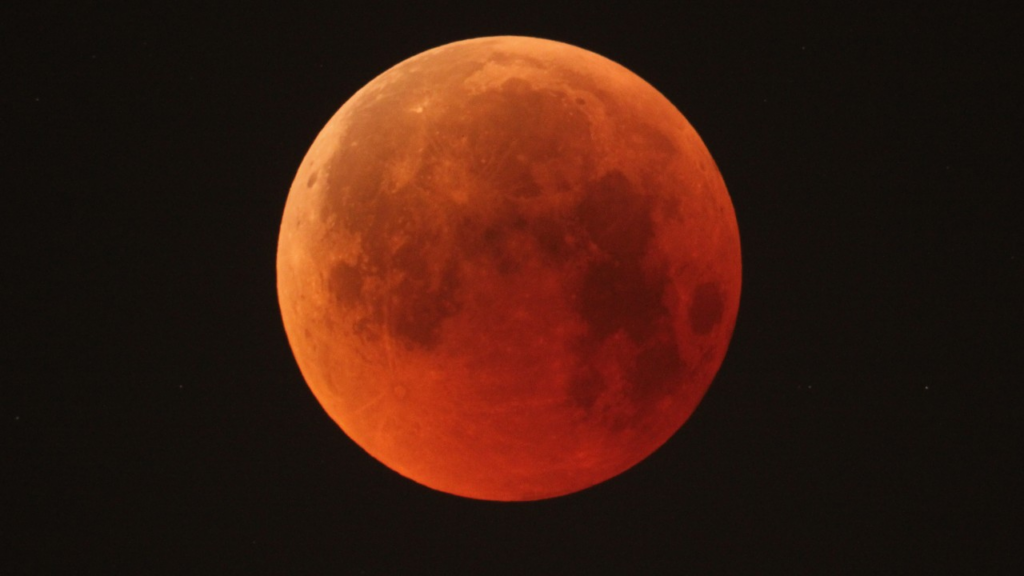
To understand just how rare a super blood moon is, we need to take a closer look at each of the three individual events that make up the phenomenon.
Firstly, a supermoon occurs when the moon is at its closest point to Earth in its orbit, known as perigee. The moon’s orbit around the Earth is not perfectly circular, but rather elliptical. This means that at certain points in its orbit, the moon is closer to Earth than at other times. When the moon is at its closest point to Earth, it appears larger and brighter in the sky, which is why it is referred to as a supermoon.
Supermoons occur fairly regularly, with about 3 to 4 per year on average. However, not all supermoons are created equal. The moon’s distance from Earth at perigee can vary, with some supermoons being closer than others. The closest possible perigee distance is known as the lunar perigee, and the farthest possible distance is known as the lunar apogee. Supermoons that occur when the moon is within 90% of its closest distance to Earth are considered to be “close” supermoons, while those that occur when the moon is within 10% of its closest distance are considered to be “perigee syzygy” supermoons. The latter are the most impressive, as they can appear up to 14% larger and 30% brighter than a typical full moon.
Secondly, a lunar eclipse occurs when the Earth passes between the sun and the moon, casting a shadow on the moon. During a total lunar eclipse, the moon passes through the Earth’s umbra, which is the darkest part of the shadow. This causes the moon to take on a reddish hue, as sunlight passing through the Earth’s atmosphere is refracted and scattered, making the moon appear red.
Lunar eclipses occur fairly regularly as well, with about 2 to 4 per year on average. However, not all lunar eclipses are total eclipses, and not all total eclipses are visible from any given location on Earth. The visibility of a lunar eclipse depends on the moon’s position in its orbit, as well as the Earth’s position and the angle of the moon’s path through the Earth’s shadow.
Lastly, a blood moon occurs when the moon takes on a reddish hue during a total lunar eclipse. This happens because the Earth’s atmosphere scatters sunlight, with shorter wavelengths (like blue and green) being scattered more than longer wavelengths (like red and orange). As a result, the light that reaches the moon during a total lunar eclipse is mostly red and orange in color, giving the moon a reddish hue.
So, how rare is a super blood moon, which combines all three of these events? The answer is that it depends on several factors. Firstly, the frequency of supermoons and lunar eclipses varies from year to year. In some years, there may be several supermoons and lunar eclipses, while in others there may be none. Secondly, the visibility of a lunar eclipse depends on the moon’s position in its orbit and the Earth’s position and angle