Jerusalem is a city located in the Middle East region, which straddles the border between Asia and Africa. Its unique geographic location has resulted in a rich and diverse history, with influences from various cultures and religions throughout the centuries.
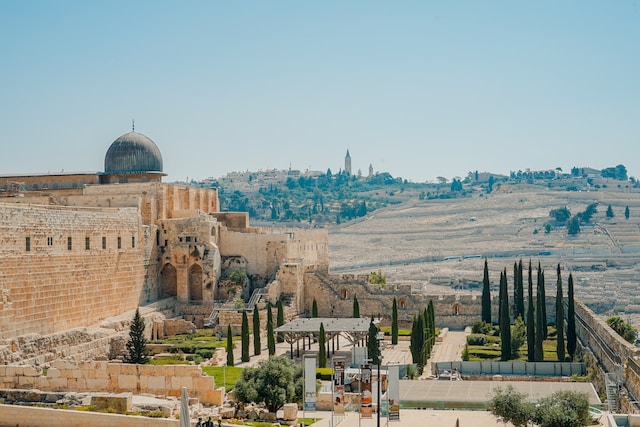
To understand why Jerusalem is located in this region, it is important to understand the geography of the area. The Middle East is a region that lies at the crossroads of three continents: Europe, Asia, and Africa. This region has been the site of numerous cultural and economic exchanges throughout history, due in part to its strategic location.
Jerusalem, in particular, is located in the Judean Mountains of Israel, which are part of the larger Jordan Rift Valley. The city sits on a plateau about 2,500 feet above sea level, which provides a commanding view of the surrounding area. This vantage point has made Jerusalem a desirable location for settlements and fortifications for thousands of years.
The history of Jerusalem can be traced back to the 4th millennium BCE, when the city was first inhabited by the Canaanites. Over the centuries, Jerusalem has been conquered and ruled by a variety of different empires and civilizations, including the Assyrians, Babylonians, Persians, Greeks, Romans, Byzantines, Arabs, Crusaders, Ottomans, and British.
Throughout this long and complex history, Jerusalem has been an important center of religious and cultural activity. The city is holy to three of the world’s major religions: Judaism, Christianity, and Islam. Each of these religions has left its mark on the city’s architecture, art, and culture, creating a unique blend of styles and traditions.
Despite its strategic location and rich history, Jerusalem has also been the site of numerous conflicts and wars throughout the centuries. Its location at the intersection of three continents has made it a valuable prize for conquerors and a flashpoint for tensions between different groups. The city has been sacked and rebuilt numerous times, with each conqueror leaving their own imprint on the city.
Today, Jerusalem is the capital of Israel and a thriving metropolis with a diverse population of Jews, Christians, Muslims, and other groups. The city is home to numerous cultural and religious sites, including the Western Wall, the Dome of the Rock, and the Church of the Holy Sepulchre. It is also an important center of politics and diplomacy, with numerous international organizations and embassies located in the city.
In conclusion, Jerusalem is a city located in the Middle East region, which straddles the border between Asia and Africa. Its unique location at the crossroads of three continents has resulted in a rich and diverse history, with influences from various cultures and religions throughout the centuries. Despite its strategic location and rich history, Jerusalem has also been the site of numerous conflicts and wars throughout the centuries. Today, it remains an important center of religious, cultural, and political activity, with a vibrant and diverse population.