Lava is a fascinating substance that has captured the imagination of people for centuries. It is a molten rock that is formed when the temperature of solid rock is raised to a point where it melts and becomes a liquid. The lava then flows out of volcanoes and can spread over large areas, sometimes causing significant damage and destruction.
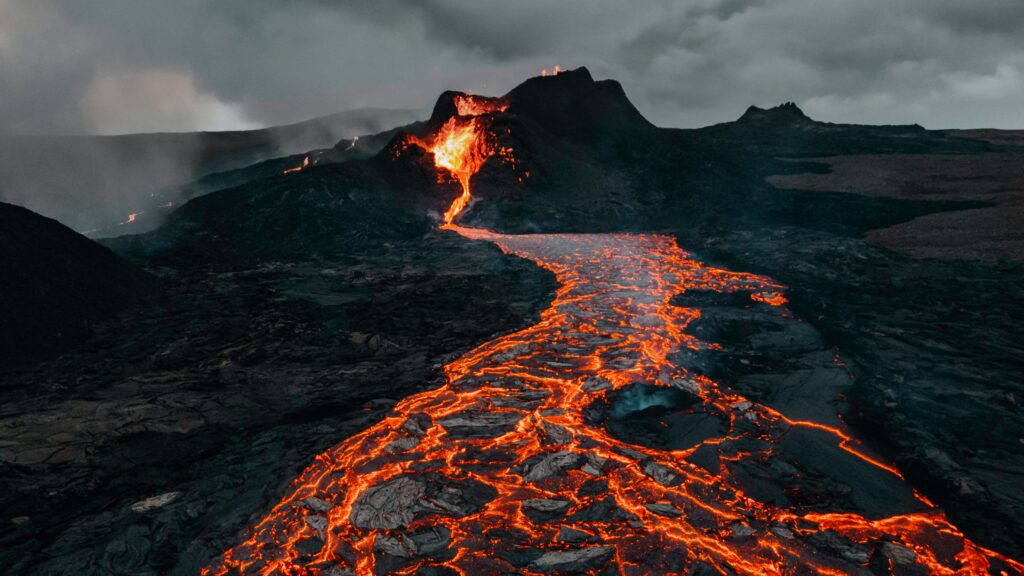
The question of whether lava is wet or dry is an interesting one, and it depends on how you define the terms “wet” and “dry.” In some senses, lava can be considered wet, while in others, it can be considered dry.
If we define “wet” as something that contains moisture or liquid, then lava can be considered wet. Lava is, after all, a liquid substance that contains a significant amount of water, along with other volatile components such as carbon dioxide and sulfur dioxide. These components can escape from the lava as it cools, leaving behind solid rock.
On the other hand, if we define “dry” as something that is not moist or does not contain liquid, then lava can also be considered dry. Once the lava has cooled and solidified, it is no longer wet and contains no moisture. The resulting rock is typically hard and brittle, and is often used for building materials and other purposes.
Another way to think about the wet/dry question is to consider how lava behaves when it comes into contact with other materials. For example, if lava flows over water, it can cause the water to boil and turn to steam, creating a potentially dangerous situation. This would suggest that lava is wet, in the sense that it can interact with other liquids and cause them to change state.
On the other hand, if lava were to come into contact with something like sand, it would tend to dry out the sand and turn it into hardened rock. In this sense, lava could be considered dry, since it has a drying effect on other materials.
Ultimately, the answer to the question of whether lava is wet or dry depends on how you choose to define those terms. From a scientific perspective, lava is a liquid substance that contains water and other volatile components. However, once it has cooled and solidified, it is no longer wet and contains no moisture. So, in a sense, lava can be both wet and dry, depending on the context in which it is being considered.