NaCl is a compound that is held together by electrostatic forces and is commonly referred to as an ionic compound. This type of compound is composed of ions that are held together by these forces, as opposed to covalent compounds which are composed of molecules held together by shared electron pairs. NaCl is formed by the reaction between two elements: sodium (Na) and chlorine (Cl). Sodium is a reactive metal that readily gives up an electron to form a cation with a charge of +1, while chlorine is a highly electronegative nonmetal that readily accepts an electron to form an anion with a charge of -1. The compound NaCl is formed when the sodium atom donates an electron to the chlorine atom, resulting in the formation of a sodium cation (Na+) and a chloride anion (Cl-).
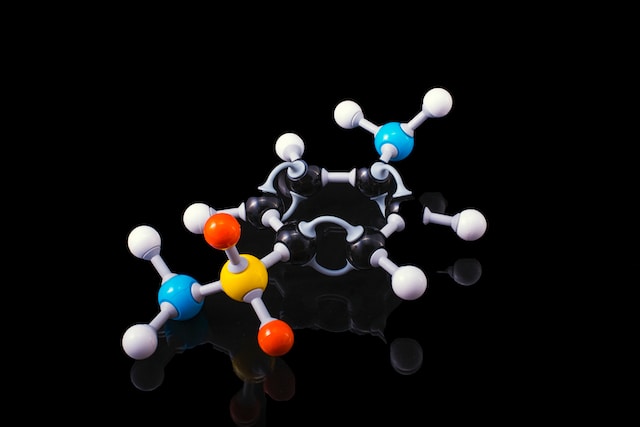
The forces holding NaCl together are known as ionic bonds, which are relatively strong compared to the covalent bonds found in molecules. The compound NaCl is a crystalline solid at room temperature and is highly soluble in water. When it dissolves in water, the ionic bonds between the Na+ and Cl- ions are broken, and the ions become surrounded by water molecules, which is known as hydration.
Ionic compounds like NaCl have several characteristics that distinguish them from covalent compounds. They tend to have high melting and boiling points, are typically hard and brittle solids at room temperature, and are good conductors of electricity in their molten or aqueous state. Ionic compounds often form crystal structures, which are highly organized and repeat in a predictable pattern, with each ion surrounded by ions of the opposite charge. These crystal structures are responsible for many of the unique properties of ionic compounds.
In conclusion, NaCl is an ionic compound that is composed of sodium cations and chloride anions held together by electrostatic forces. These forces result in a crystalline solid with high melting and boiling points, and the compound is highly soluble in water. Ionic compounds like NaCl have several unique properties, including the ability to form crystal structures and conduct electricity in their molten or aqueous state. Understanding the properties and characteristics of ionic compounds like NaCl is essential to understanding the behavior of many materials in the natural world and in industrial applications.