Ammonia (NH3) is a covalent compound, which means that it is made up of covalent bonds. In this answer, we will discuss what covalent bonds are, how they form, and why ammonia is considered a covalent compound.
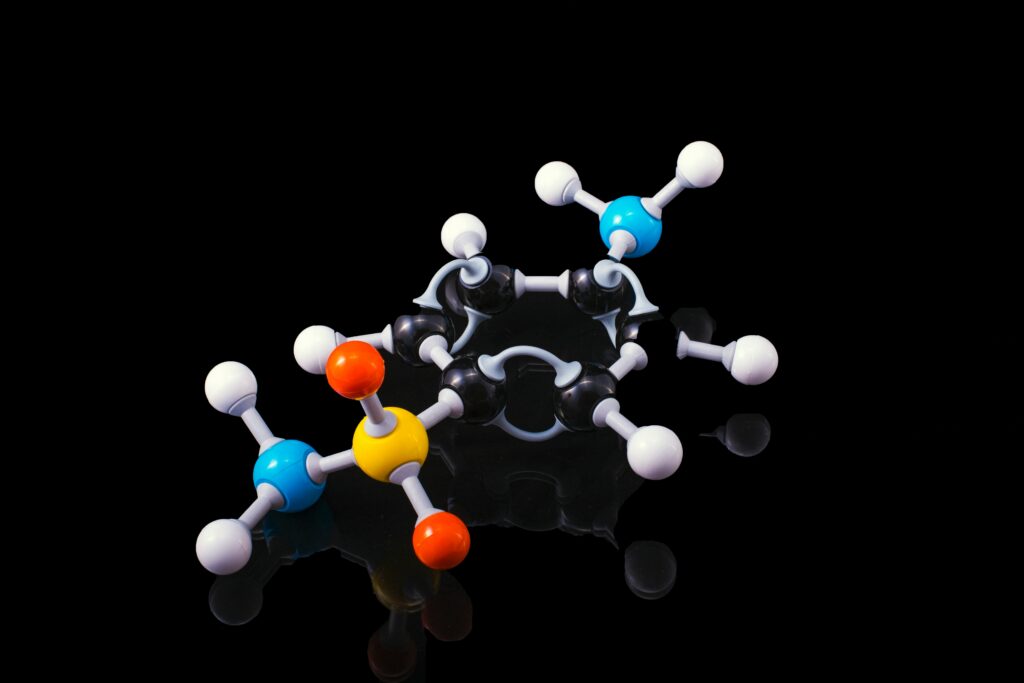
Covalent bonds occur when atoms share electrons. Atoms can either share one or more pairs of electrons, depending on how many electrons they need to complete their outermost electron shell. The outermost electron shell is also called the valence shell. Atoms that share electrons in this way are said to be bonded covalently.
To understand how covalent bonds form, it is important to know about the concept of electronegativity. Electronegativity is a measure of how strongly an atom attracts electrons towards itself. When atoms share electrons, they do so in a way that balances the electronegativity of the two atoms involved. If the electronegativities are too different, then one atom will end up attracting the shared electrons more strongly than the other, resulting in an ionic bond.
In the case of ammonia, nitrogen (N) has five valence electrons and needs three more electrons to complete its outermost shell. Hydrogen (H) has one valence electron and needs one more electron to complete its outermost shell. The nitrogen atom shares three of its valence electrons with three hydrogen atoms to form a covalent bond. The shared electrons are evenly distributed between the nitrogen and hydrogen atoms, resulting in a stable molecule.
The covalent bond in ammonia is a polar covalent bond. A polar covalent bond is a type of covalent bond in which the electrons are shared unequally between the atoms. In ammonia, the nitrogen atom is more electronegative than the hydrogen atoms, meaning it attracts the shared electrons more strongly. This causes a partial negative charge to develop on the nitrogen atom and a partial positive charge on the hydrogen atoms.
The polar nature of ammonia allows it to form hydrogen bonds, which are a type of intermolecular force. Hydrogen bonds occur when a hydrogen atom bonded to a highly electronegative atom (such as nitrogen or oxygen) is attracted to a nearby electronegative atom. In the case of ammonia, the partially positive hydrogen atoms are attracted to the partially negative nitrogen atoms in neighboring ammonia molecules.