The question of whether the sun is a living thing is an interesting one, as it depends on how we define “life” and what criteria we use to determine whether something is alive or not.
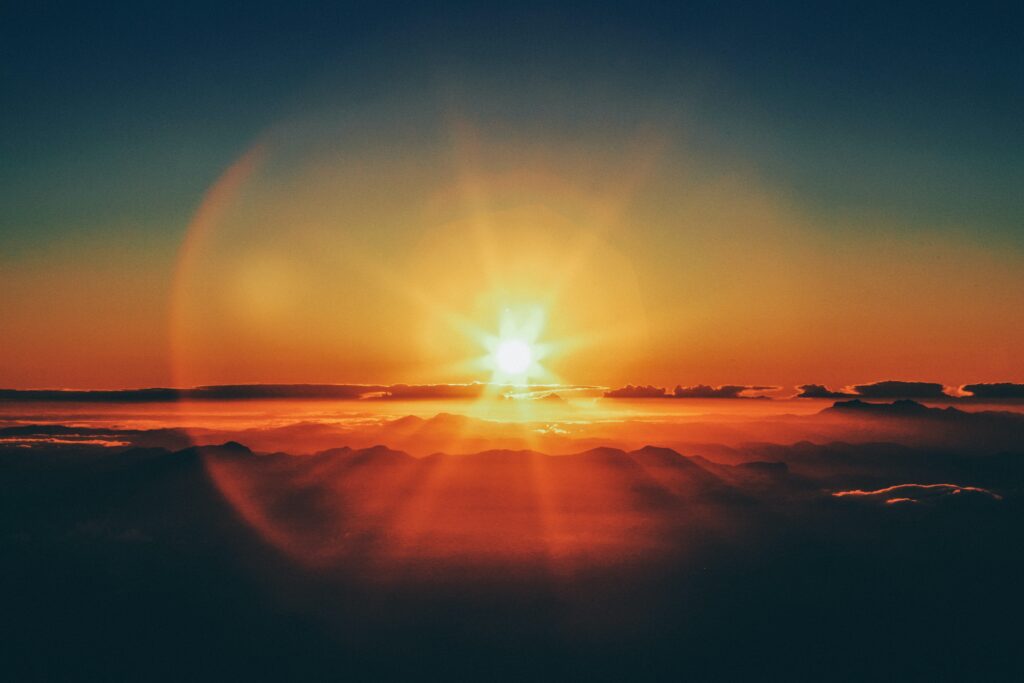
According to traditional definitions of life, organisms are characterized by several key features, including the ability to grow and develop, respond to stimuli, reproduce, maintain homeostasis, and metabolize energy. However, these characteristics are not always straightforward to apply to non-living entities like the sun.
On the one hand, the sun certainly exhibits many properties that might be associated with living things. For example, it undergoes a complex process of nuclear fusion that involves the conversion of hydrogen into helium, which releases a vast amount of energy and sustains the sun’s temperature and luminosity. This process can be thought of as a kind of metabolism, in which the sun “consumes” hydrogen and “produces” helium as waste.
Moreover, the sun is capable of responding to various stimuli, such as changes in the gravitational forces exerted by the planets and other objects in the solar system. These interactions can cause the sun to undergo various cycles of activity, such as sunspots, flares, and coronal mass ejections, which can have significant effects on the Earth’s climate and other systems.
However, despite these similarities, there are also some fundamental differences between the sun and living organisms. For example, the sun does not have the ability to reproduce in the same way that living things do, and it does not have a complex genetic code that determines its structure or behavior.
Furthermore, the sun does not exhibit the same kind of homeostasis that is characteristic of living things. While it is true that the sun maintains a relatively stable temperature and luminosity over long periods of time, this is largely due to the balance between the forces of nuclear fusion and gravity, rather than any active regulation or feedback mechanisms.
In conclusion, while the question of whether the sun is a living thing is not entirely clear-cut, it is generally not considered to be a living organism in the traditional sense. While the sun exhibits some properties that might be associated with life, such as metabolism and responsiveness to stimuli, it lacks other key features, such as reproduction and active homeostasis. Ultimately, the answer to this question may depend on how we define “life” and what criteria we use to determine whether something is alive or not.