The United States government once printed banknotes with higher denominations, including the $500, $1,000, $5,000, and $10,000 bills. The $1,000 bill, also known as the “grand watermelon,” was first issued in 1861 as a Legal Tender Note. The note featured a portrait of Salmon P. Chase, who served as Secretary of the Treasury under President Abraham Lincoln.
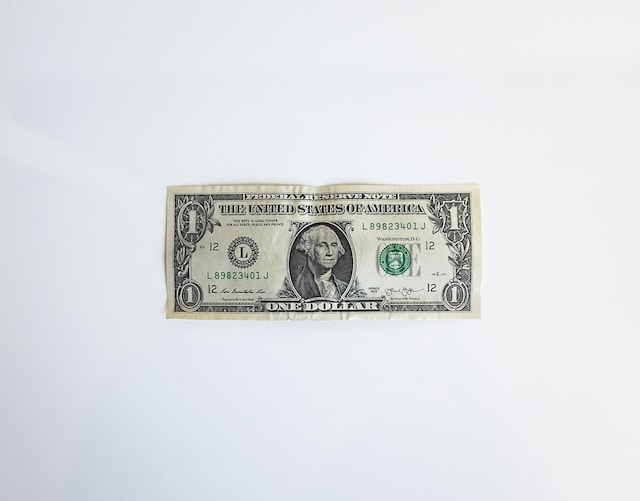
Over the years, the design of the $1,000 bill changed, with new portraits and designs added to the note. During World War II, the demand for higher denomination bills increased as the government needed to fund military operations overseas. As a result, the Treasury Department printed more $1,000 bills than ever before, with over 65 million notes issued between 1934 and 1945. The last series of $1,000 bills featured a portrait of Grover Cleveland, who served as both the 22nd and 24th President of the United States.
Despite their high face value, $1,000 bills were primarily used by banks and large financial institutions for interbank transactions. The average person would rarely see a $1,000 bill in circulation, as they were not commonly used in everyday commerce.
In 1969, the government announced that it would discontinue the printing of high-denomination bills, including the $500, $1,000, $5,000, and $10,000 bills. The decision was made in part to combat money laundering and other illegal activities, as higher denomination bills were often used to facilitate these types of transactions.
Although they are no longer printed, $1,000 bills are still considered legal tender, which means they can be used to pay debts and taxes. However, they are very rare and are primarily held by collectors and museums. According to the Federal Reserve, there are only a limited number of $1,000 bills still in existence, which is a small fraction of the total number of bills printed.
The value of a $1,000 bill today depends on several factors, including its condition, rarity, and historical significance. Some $1,000 bills have sold for tens of thousands of dollars at auction, while others may only be worth slightly more than their face value.
In conclusion, while the $1,000 bill is no longer printed by the US Treasury Department, it is still considered legal tender and is held in collections and museums around the world. Despite their high face value, $1,000 bills were primarily used by banks and financial institutions for interbank transactions, and the average person rarely saw one in circulation. With only a limited number of bills still in existence, the value of a $1,000 bill today depends on several factors, including its condition, rarity, and historical significance.