Dough is the foundation of many beloved baked goods, from breads to pastries, and mastering it can elevate your baking skills to new heights. This guide is here to help you understand dough work and provide you with the essential techniques and tips for creating a variety of doughs.
Whether you’re making a flaky pie crust, a soft pizza dough, or a hearty bread, the right approach can make all the difference. We’ll explore the different types of dough, how to knead, rest, and shape them, ensuring your creations turn out perfect every time.
Get ready to roll up your sleeves and dive into the world of dough! With a little practice, you’ll be able to create delicious, homemade baked goods that will impress friends and family.
Understanding Dough Types
Dough serves as the bedrock for many culinary creations, ranging from crusty breads to delicate pastries.
Each type of dough has its own unique characteristics and purposes.
Bread dough is typically yeast-leavened, resulting in a chewy texture, while pastry dough often incorporates fat to create a flaky, tender finish.
Pizza dough combines the qualities of bread and pastry, allowing for a crispy crust that holds up under the weight of toppings.
These distinctions highlight the versatility and essential nature of dough in the kitchen.
Key Techniques for Dough Preparation
Creating exceptional dough requires attention to detail and a grasp of fundamental techniques.
Accurate measurement of ingredients sets the foundation, as the balance of flour, liquid, and fat directly impacts the dough’s structure and flavor.
Kneading is another critical step, as it develops gluten, providing strength and elasticity.
This process should be thorough yet gentle to avoid overworking the dough, leading to undesirable textures in the final product.
Importance of Resting and Proofing
Allowing dough to rest and rise is crucial in achieving the desired texture and flavor.
After mixing, the dough should be given time to hydrate and relax, which makes shaping easier and enhances the final outcome.
Proofing, or letting the dough rise, allows yeast to work its magic, creating air pockets that contribute to a light and airy bread.
This step is essential for bread and pizza dough, while certain pastry recipes may require minimal proofing.
Shaping Your Dough
Once the dough has risen, the next step is shaping it into its final form.
This can range from rolling out a pie crust to forming rolls or loaves of bread.
Shaping techniques vary based on the intended baked good, and practicing these methods will improve your skills over time.
Don’t hesitate to experiment with different shapes; each one can yield a unique presentation and texture!
Tools for Successful Dough Making
Having the right tools makes dough preparation smoother and more enjoyable.
A sturdy rolling pin is essential for rolling out dough evenly, while various baking tools, such as pastry brushes and dough scrapers, can facilitate the process.
A clean wooden surface is ideal for kneading and shaping, enhancing both the experience and the results.
Investing in quality equipment can significantly enhance your baking journey.
Experimenting with Ingredients
The choice of ingredients can dramatically influence the flavor and texture of your dough.
Using different types of flour, such as all-purpose or bread flour, alters the gluten content, thereby changing the dough’s characteristics.
Incorporating unique flavors, such as herbs or spices, can elevate simple dough recipes into something extraordinary.
Don’t shy away from trying new combinations to find what works best for your taste buds.
Essential Techniques for Dough Work
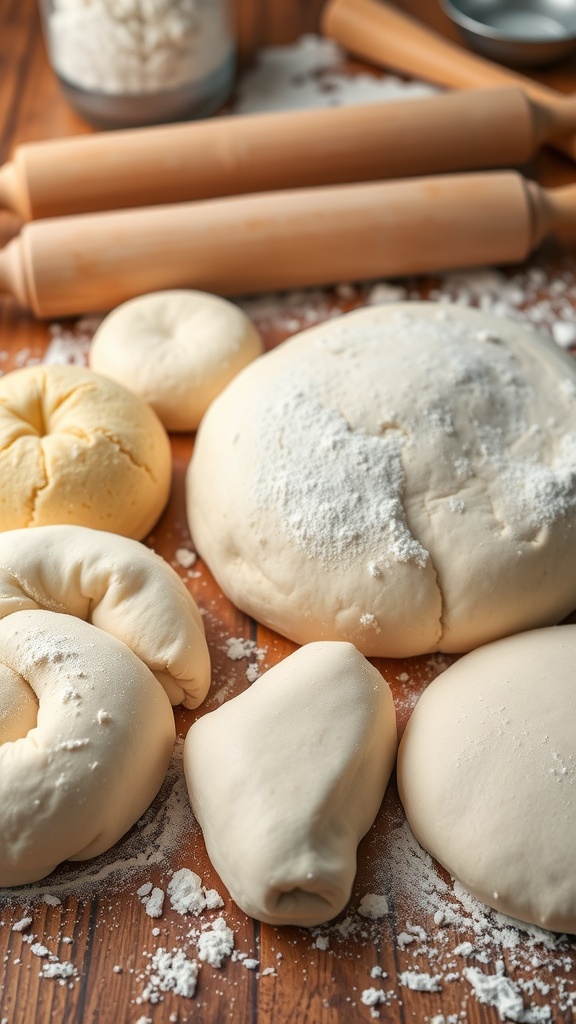
Working with dough involves a combination of art and science. The texture, flavor, and rise of your baked goods depend significantly on the dough preparation techniques you use. From measuring ingredients accurately to understanding gluten development, every step is crucial.
The taste of your dough can vary widely based on the ingredients and methods used; it can be soft and tender for pastries or chewy and crusty for breads. The balance of moisture, fat, and flour plays a key role in achieving the desired outcome.
Ingredients
- All-purpose flour or bread flour
- Water or milk
- Yeast or baking powder (depending on the recipe)
- Salt
- Sugar (optional, for sweetness)
- Fat (butter, oil, or shortening, as needed)
Instructions
- Measure Ingredients: Accurately measure your flour, water, yeast, and any additional ingredients needed for your specific dough recipe.
- Combine Ingredients: In a mixing bowl, combine the dry ingredients first, then gradually add the wet ingredients. Mix until a shaggy dough forms.
- Knead the Dough: Turn the dough onto a floured surface and knead for 8-10 minutes until it becomes smooth and elastic. This develops the gluten necessary for structure.
- Let it Rise: Place the dough in a lightly greased bowl, cover it with a damp towel or plastic wrap, and let it rise in a warm area until it doubles in size (usually 1-2 hours).
- Shape the Dough: After rising, punch down the dough to release air, then shape it according to your recipe, whether for rolls, loaves, or pastries.
- Final Proofing: Allow the shaped dough to rise again until it has puffed up (30 minutes to 1 hour), then bake according to your recipe instructions.
Cook and Prep Times
- Prep Time: 15 minutes
- Cook Time: 30 minutes
- Total Time: 45 minutes
- Servings: Varies based on the recipe
- Calories: Varies based on ingredients used
- Fat: Varies based on fat content
- Protein: Varies based on flour type
- Carbohydrates: Varies based on the recipe
Related
- Growing Garlic in Zone 7: A Comprehensive Guide
- Planting Garlic Bulbs in Zone 7: A Comprehensive Guide
- Growing Garlic in Zone 7: A Comprehensive Guide
- Growing Garlic in Zone 8: A Comprehensive Guide