Grating Parmesan cheese enhances its flavor and texture, making it a perfect addition to various dishes. Understanding the different methods of grating can help you achieve the desired consistency for your recipes.
This guide covers essential techniques for grating Parmesan cheese, including using a box grater, microplane, and food processor.
Understanding Parmesan Cheese Grating Techniques
Grating Parmesan cheese is an essential skill for any home cook.
The right technique can enhance the flavor and texture of your dishes significantly.
Whether you’re preparing a classic pasta, a salad, or a savory risotto, knowing how to grate Parmesan properly will elevate your culinary creations.
Choosing the Right Grating Tool
When it comes to grating Parmesan, the tool you select plays a vital role in the outcome.
A box grater is ideal for producing coarser shreds, which are perfect for topping dishes or incorporating into recipes where a more substantial texture is desired.
On the other hand, a microplane offers fine grating, resulting in a light and fluffy texture that melts seamlessly into sauces.
If you need to grate larger quantities quickly, a food processor can be a time-saver.
Simply cut the cheese into smaller chunks and pulse until you achieve the desired consistency.
Each method has its advantages, so choose based on your specific needs.
Preparing the Cheese for Grating
Before grating, it’s essential to prepare the Parmesan cheese properly.
Allow the cheese to reach room temperature, which makes the grating process smoother and easier.
If the cheese is too hard, letting it sit out for about 15 minutes can help soften it slightly.
Grating Techniques Explained
To grate Parmesan using a box grater, hold it over a bowl and rub the cheese against the desired side.
For a microplane, position it at an angle and scrape the cheese along the surface, applying gentle pressure.
If you opt for a food processor, remember to pulse the cheese in short bursts to avoid over-processing.
Storing Grated Parmesan Cheese
Once you’ve grated your Parmesan, it’s best to use it immediately for optimal flavor.
However, if you have leftovers, store the grated cheese in an airtight container in the refrigerator.
This will keep it fresh for up to a week, allowing you to enjoy its rich flavor in multiple dishes.
The Culinary Benefits of Freshly Grated Parmesan
Freshly grated Parmesan cheese not only enhances the taste of your meals but also adds a delightful texture.
The cheese’s melting properties change based on how finely it is grated, impacting the overall flavor distribution in your dish.
Using freshly grated cheese can transform a simple meal into a gourmet experience.
Essential Parmesan Grating Techniques
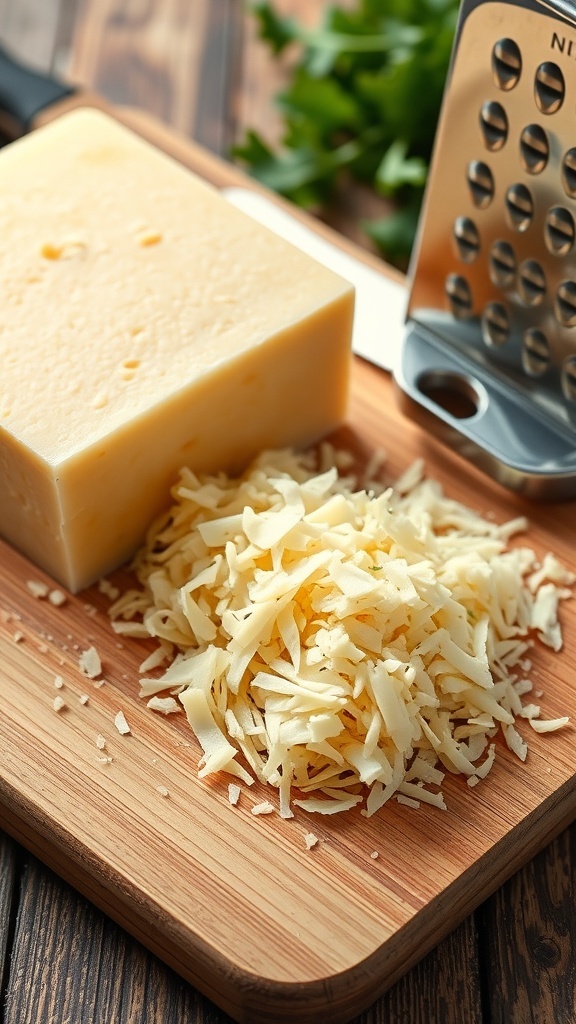
Parmesan cheese can be grated into fine, medium, or coarse textures depending on your cooking needs. The method you choose will impact the cheese’s melting properties and overall flavor distribution in your dish.
Ingredients
- Block of aged Parmesan cheese
- Grater (box grater or microplane)
- Food processor (optional)
Instructions
- Select the Right Tool: Choose a box grater for coarser shreds, a microplane for fine grating, or a food processor for quick grating in larger quantities.
- Prepare the Cheese: Ensure the Parmesan is at room temperature for easier grating. If it’s too hard, let it sit out for about 15 minutes.
- Grate the Cheese: For a box grater, hold it over a bowl and rub the cheese against the desired side. For a microplane, hold it at an angle and scrape the cheese along the surface. If using a food processor, cut the cheese into smaller chunks and pulse until grated.
- Store Grated Cheese: Use the grated Parmesan immediately or store it in an airtight container in the refrigerator for up to a week.
Cook and Prep Times
- Prep Time: 5 minutes
- Total Time: 5 minutes
- Servings: Varies based on usage
- Calories: 110kcal per ounce
- Fat: 7g
- Protein: 10g
- Carbohydrates: 1g
Related
- 5 Easy DIY Haircut Techniques You Can Try at Home
- Mastering Bread Scoring Techniques
- Captivating Rice Terraces Drawing Techniques
- Lobster Embroidery Patterns and Techniques