Recipe journaling is an effective way to document your cooking experiences, track your favorite recipes, and note any modifications you make along the way. This practice not only helps you remember what you’ve cooked but also allows you to reflect on your culinary journey.
By keeping a recipe journal, you can create a personalized cookbook that evolves with your tastes and skills. It can include notes on ingredients, cooking techniques, and even the stories behind each dish.
The Charm of Recipe Journaling
Recipe journaling offers a unique way to capture your culinary experiences. It serves as a personal archive where you can document not just the recipes you follow, but also the memories tied to each dish.
Each entry becomes a snapshot of your cooking journey, allowing you to reflect on your growth in the kitchen. From the first time you attempted a challenging recipe to the moments of triumph when a dish turns out perfectly, your journal holds these cherished memories.
Setting Up Your Recipe Journal
Starting a recipe journal can be a delightful process. You can choose a simple notebook or opt for a digital app, depending on your preference. The goal is to create a space where you feel inspired to write.
Gather your favorite recipes to kick off your journaling journey. This could include family recipes passed down through generations or new ones you’ve discovered online. The key is to write down everything that resonates with you.
Personalizing Your Journal
Your recipe journal should reflect your personality. Consider using different colored pens or adding stickers to make it visually appealing. This personalization can make the journaling process even more enjoyable.
Incorporate illustrations or doodles that represent the dishes you are documenting. This adds a creative touch and makes your journal a true reflection of your culinary adventures.
Documenting Your Cooking Experiences
When you prepare a dish, take a moment to jot down your thoughts. Include any modifications you made to the recipe, what worked well, and what you might change next time. This practice not only helps you remember the details but also encourages experimentation.
Reflect on the occasion surrounding the meal. Who did you share it with? Were there any memorable conversations or moments? These reflections add depth to your entries and make them more meaningful.
Organizing Your Journal
As your collection of recipes grows, consider organizing your journal for easy reference. You might categorize recipes by type, such as appetizers, main courses, and desserts. This structure can save you time when searching for a specific dish.
Using tabs or color-coded sections can enhance the organization, making it easier to flip through your journal and find inspiration for your next cooking session.
Reviewing and Updating Your Journal
Regularly revisiting your journal is essential for keeping it fresh and relevant. Take time to add new recipes, refine your notes, and reflect on your culinary journey. This ongoing process ensures that your journal evolves alongside your cooking skills and tastes.
Consider setting aside a specific time each week or month to review your entries. This practice not only keeps your journal updated but also allows you to celebrate your progress in the kitchen.
How to Start Your Recipe Journal
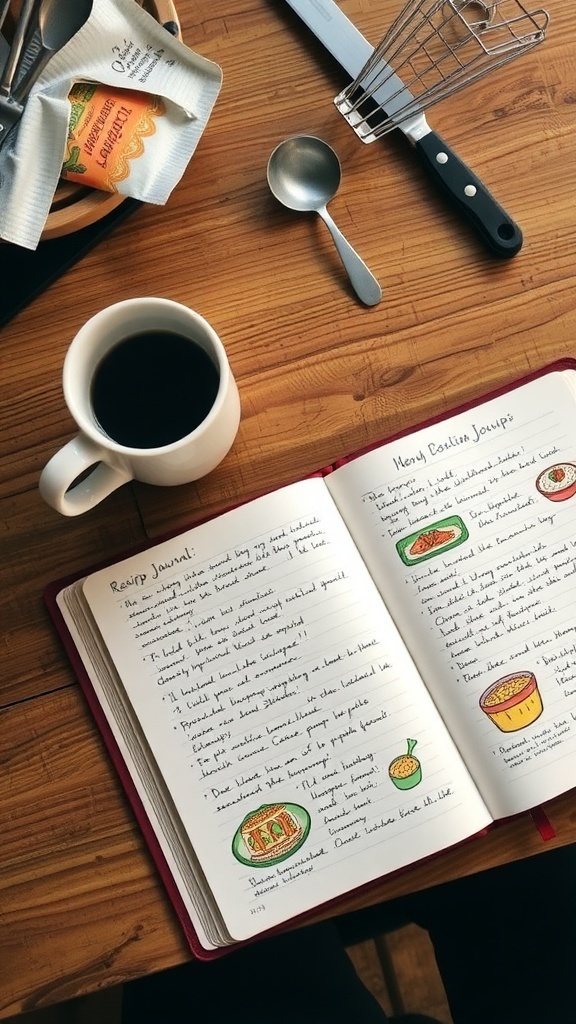
A recipe journal can be as simple or elaborate as you like. You can use a notebook, a digital app, or a dedicated recipe journal. The key is to consistently write down your recipes, thoughts, and experiences related to cooking. This guide will help you get started.
Ingredients
- A notebook or digital app for journaling
- Pens or pencils for writing
- Your favorite recipes to start with
- Optional: Stickers or decorative items for personalization
Instructions
- Choose Your Format: Decide whether you want a physical notebook or a digital app for your journaling.
- Start with a Recipe: Write down a recipe you love or want to try. Include ingredients, measurements, and cooking instructions.
- Add Personal Notes: After cooking, jot down any modifications you made, what worked well, and what you would change next time.
- Reflect on Your Experience: Include notes about the occasion, who you shared the meal with, and any memorable moments.
- Organize Your Journal: Consider categorizing recipes by type (e.g., appetizers, main dishes, desserts) for easy reference.
- Review and Update: Regularly revisit your journal to add new recipes and refine your notes.
Cook and Prep Times
- Prep Time: 5 minutes
- Total Time: Ongoing
- Servings: N/A
- Calories: N/A
- Fat: N/A
- Protein: N/A
- Carbohydrates: N/A
Related
- 5 Inspiring Journaling Prompts for a Fresh Start in 2025
- Christmas Doodles for Bullet Journaling
- Christmas Journaling Doodles Ideas
- Should i answer 866 calls?