Capturing beautiful food photos can elevate your cooking blog or social media presence. Good recipe photography showcases the dish and entices viewers to try the recipe themselves.
This guide provides practical tips for taking stunning food photos, focusing on lighting, composition, and styling techniques.
Creating the Perfect Food Photography Setup
Setting the stage for food photography involves more than just placing a dish on a table.
The arrangement should tell a story, inviting viewers to experience the dish visually.
In this case, a vibrant salad in a rustic bowl serves as the focal point, surrounded by fresh vegetables and herbs.
This setup not only showcases the salad but also emphasizes the freshness of the ingredients.
The Importance of Natural Light
Natural light is a game changer in food photography.
Shooting during the day near a window allows soft, diffused light to illuminate the dish, enhancing its colors and textures.
Avoid harsh overhead lighting, which can create unflattering shadows and distort the appearance of the food.
Positioning the setup near a window not only provides the best lighting but also adds a natural ambiance to the scene.
The interplay of light and shadow can bring depth to the image, making the salad look more inviting.
Choosing the Right Background
The background plays a crucial role in food photography.
A wooden table serves as an excellent backdrop, adding warmth and texture to the composition.
It complements the rustic bowl and highlights the vibrant colors of the salad and surrounding vegetables.
When selecting a background, aim for simplicity.
An uncluttered surface allows the dish to take center stage, ensuring that the viewer’s attention remains focused on the food.
Styling the Dish
Styling is an essential aspect of food photography that can elevate the visual appeal of the dish.
Adding garnishes or props that complement the salad can enhance the overall presentation.
Fresh herbs, colorful vegetables, or even a drizzle of dressing can add interest and texture to the image.
Consider the arrangement of the ingredients.
A well-styled dish not only looks appetizing but also encourages viewers to want to recreate the experience in their own kitchens.
Experimenting with Angles
Finding the right angle can make a significant difference in food photography.
Try various perspectives, such as shooting from above, at eye level, or at a 45-degree angle.
Each angle offers a unique view of the dish, showcasing different elements and textures.
Experimenting with angles allows for creative expression and can lead to unexpected, stunning results.
Don’t hesitate to move around the setup to find the most appealing perspective.
Editing for a Polished Look
Once the photos are taken, thoughtful editing can enhance the final image.
Using photo editing software, adjust brightness, contrast, and color balance to achieve a polished look.
Editing can help to bring out the vibrancy of the salad and make the dish appear even more appetizing.
Remember, the goal is to maintain the natural beauty of the food while enhancing its visual appeal.
A well-edited photo can entice viewers and encourage them to try the recipe themselves.
Essential Tips for Food Photography
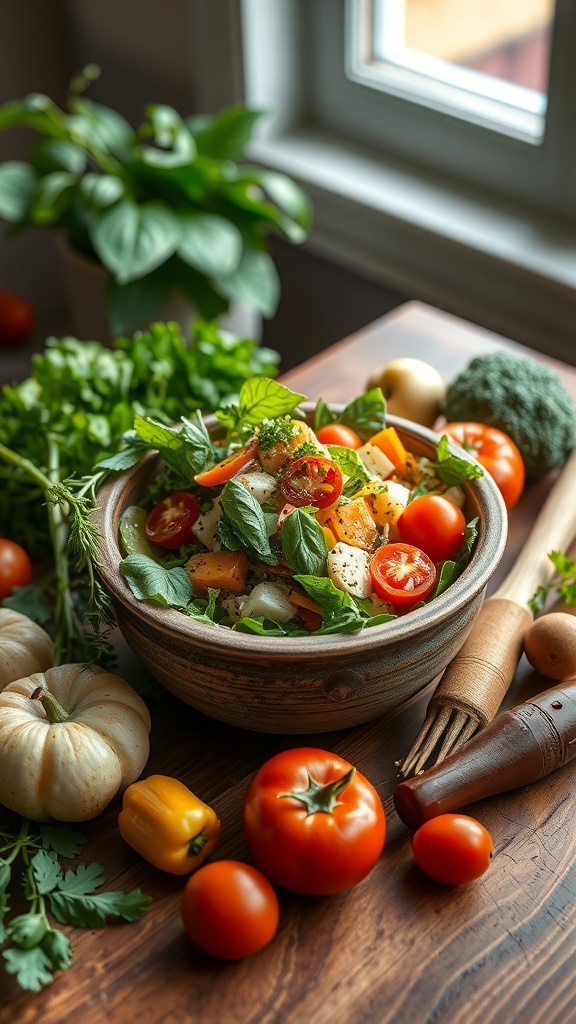
Effective food photography requires attention to detail. Use natural light whenever possible, experiment with different angles, and pay attention to the background and props to enhance the overall presentation.
Ingredients
Related
- Delicious Homemade Tomato Sauce Recipe for Photography
- Captivating Lobster Photography Techniques
- Stunning Underwater Lobster Photography Techniques
- Delicious Pasta Dish Photography Ideas