This recipe layout provides a clear and organized structure for presenting cooking instructions and ingredients. It is designed to make it easy for readers to follow along while preparing a dish.
The layout includes sections for the title, introduction, ingredients, instructions, and additional information like cooking time and nutrition facts.
Standard Recipe Format
A well-structured recipe layout is essential for both novice and experienced cooks. It provides a clear framework that guides readers through the cooking process, making it easier to follow along.
This format typically begins with a title that captures the essence of the dish, followed by an introduction that gives context and highlights key ingredients or methods. A subheading summarizes the recipe type, ensuring that readers know what to expect.
Ingredients Section
The ingredients list is a crucial component of any recipe layout. It should be presented in a clear and organized manner, specifying quantities and any optional items. This allows readers to gather everything they need before starting the cooking process.
Including a well-defined ingredients section helps prevent confusion and ensures that nothing is overlooked. This clarity is especially beneficial for those who may be new to cooking or unfamiliar with certain ingredients.
Instructions for Preparation
Step-by-step instructions are vital for guiding readers through the preparation process. Each step should be concise and easy to understand, allowing cooks to follow along without getting lost.
Detailing the cooking instructions in a logical sequence helps maintain clarity. It’s important to include any specific techniques or tips that might enhance the cooking experience or improve the final result.
Time Information
Providing time information for preparation, cooking, and total time is essential for managing expectations. This allows readers to plan their cooking sessions accordingly and ensures they have enough time to complete the dish.
Including this information can also help cooks gauge the complexity of the recipe and decide when to start based on their schedule.
Type of Dish and Nutritional Information
Specifying the type of dish, including course and cuisine, aids in better categorization. This helps readers quickly identify whether the recipe fits their meal planning needs.
Nutrition information is another important aspect to include. It informs readers about serving sizes and dietary considerations, making it easier for those with specific dietary needs to assess the recipe’s suitability.
Visual Appeal and Accessibility
A clean and organized layout enhances the visual appeal of the recipe. Using a neutral background helps the text stand out, making it easier to read and follow.
Incorporating image descriptions and alt text not only improves accessibility for those using screen readers but also enriches the overall presentation of the recipe. This attention to detail ensures that the layout is both functional and inviting.
Standard Recipe Format
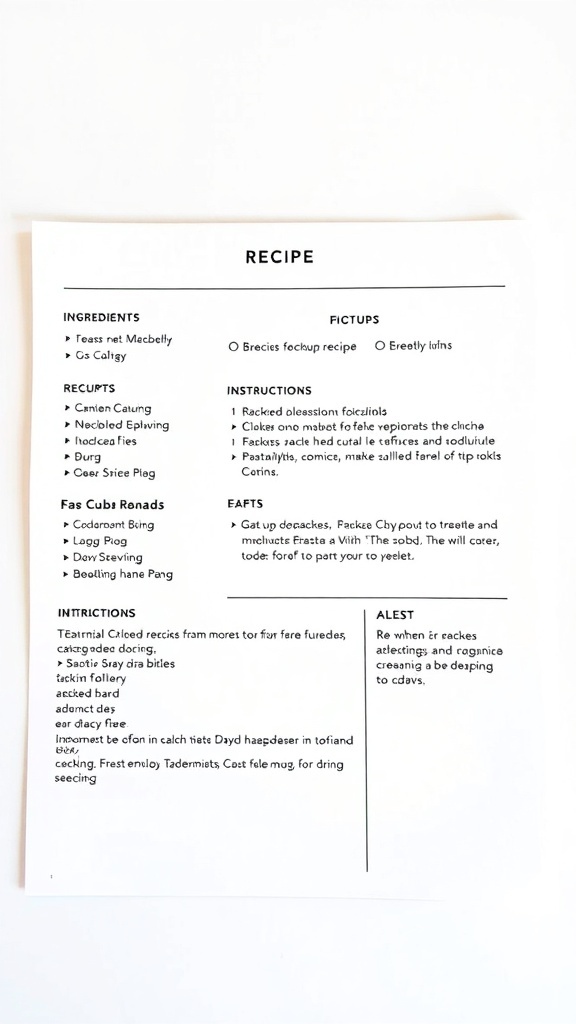
A well-structured recipe layout helps both novice and experienced cooks understand the steps involved in making a dish. It typically includes an ingredient list followed by step-by-step instructions, ensuring clarity and ease of use.
Ingredients
- Title of the Recipe
- Introductory Paragraphs
- Subheading
- Description Paragraphs
- Ingredients List
- Instructions List
- Time Information
- Type of Dish (Course and Cuisine)
- Nutrition Information
- Image Description and Alt Text
Instructions
- Begin with a clear title that reflects the dish being prepared.
- Provide an introduction that gives context and highlights key ingredients or cooking methods.
- Include a subheading that summarizes the recipe type.
- Add a description that outlines the dish’s characteristics and serving suggestions.
- List all ingredients in a clear format, specifying quantities and any optional items.
- Detail the cooking instructions step-by-step to guide the reader through the preparation process.
- Include time information for prep, cook, and total time to manage expectations.
- Specify the type of dish, including course and cuisine, for better categorization.
- Provide nutrition information to inform readers about serving sizes and dietary considerations.
- Incorporate an image description and alt text to enhance accessibility and visual appeal.
Cook and Prep Times
- Prep Time: Variable
- Cook Time: Variable
- Total Time: Variable
- Servings: Variable
- Calories: Variable
- Fat: Variable
- Protein: Variable
- Carbohydrates: Variable
Related
- 5 Inspiring Bedroom Layout Designs for a Cozy Retreat
- 5 Stylish Bedroom Layout Ideas for a Cozy Retreat
- 5 Inspiring Bedroom Layout Ideas for a Cozy Retreat
- Cheese Escape Map Layout