This article explores the three primary dietary classifications: carnivores, omnivores, and herbivores. Each type has distinct eating habits and nutritional needs that define their place in the ecosystem.
Understanding these dietary types can provide insight into animal behavior and ecology, as well as inform dietary choices for humans seeking to align with specific nutritional philosophies.
Understanding Dietary Classifications
In the animal kingdom, dietary classifications play a significant role in understanding how different species interact with their environment.
Carnivores, omnivores, and herbivores each have unique eating habits that define their ecological niches.
These classifications help illustrate the diverse ways animals obtain their nutrition and adapt to their habitats.
Carnivores: The Meat-Eaters
Carnivores are animals that primarily consume meat.
They rely on hunting and scavenging to meet their nutritional needs.
A prime example is the lion, which hunts in the savannah, showcasing its prowess as a predator.
These animals have evolved sharp teeth and claws, enabling them to capture and consume their prey effectively.
Their role in the ecosystem is crucial, as they help maintain the balance of animal populations.
Omnivores: The Versatile Eaters
Omnivores have a varied diet that includes both plant and animal sources.
This flexibility allows them to thrive in diverse environments.
Bears, for instance, forage for berries and fish, demonstrating their adaptability in food selection.
With the ability to consume a wide range of foods, omnivores can adjust their diet based on availability.
This adaptability is vital for survival, especially in changing habitats.
Herbivores: The Plant-Eaters
Herbivores focus exclusively on plant-based diets, deriving their nutrients from fruits, vegetables, and grains.
Cows are a classic example, grazing in lush green fields, where they consume grasses and other vegetation.
These animals have specialized digestive systems that allow them to break down tough plant materials.
Their feeding habits play a significant role in shaping their ecosystems, as they help in seed dispersal and maintaining plant populations.
Visual Representation of Dietary Types
Imagery can powerfully convey the distinctions between carnivores, omnivores, and herbivores.
A vibrant and realistic depiction of these animals in their natural habitats highlights their unique dietary preferences.
For instance, a lion hunting in the savannah captures the essence of a carnivore’s lifestyle, while a bear foraging for berries and fish illustrates the omnivore’s adaptability.
Meanwhile, a cow grazing in a lush field represents the herbivore’s reliance on plant life.
Ecological Importance of Dietary Classifications
Understanding these dietary types is essential for grasping animal behavior and ecology.
Each group plays a specific role in their ecosystems, contributing to biodiversity and ecological balance.
By recognizing the dietary preferences of different species, we can better appreciate the complexity of food webs and the interdependence of life forms in nature.
This knowledge also informs human dietary choices, promoting a deeper connection to our food sources.
Dietary Classifications Explained
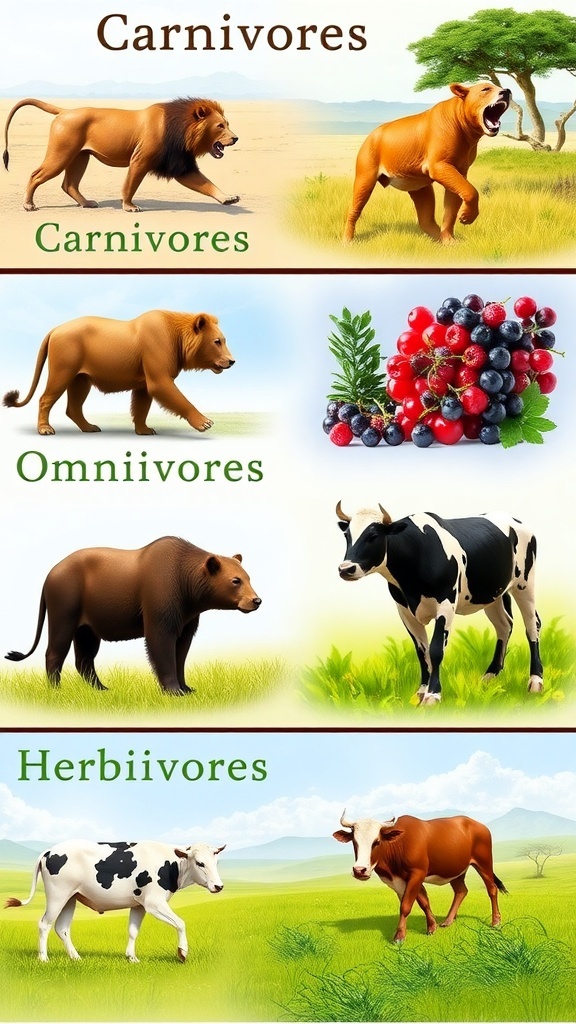
Carnivores primarily consume meat, relying on other animals for their nutritional needs. Omnivores have a varied diet that includes both plant and animal sources, allowing for greater flexibility in food choices. Herbivores, on the other hand, focus exclusively on plant-based diets, deriving their nutrients from fruits, vegetables, and grains.