Egg grading is an essential process that determines the quality and freshness of eggs. It involves evaluating various factors such as the size, shell quality, and the condition of the egg’s contents.
This grading system helps consumers choose the best eggs for their needs and ensures that eggs meet safety standards.
Understanding Egg Grading
Egg grading is a vital process that assesses the quality and freshness of eggs. It involves a thorough evaluation of several factors, including size, shell integrity, and the condition of the egg’s contents.
This grading system is designed to guide consumers in selecting the best eggs for their culinary needs while ensuring that all eggs adhere to safety standards.
Egg Grading Process
Eggs are classified into different grades based on their quality, which includes categories such as AA, A, and B. Grade AA eggs represent the highest standard, characterized by firm whites and high, round yolks.
In contrast, Grade B eggs may exhibit thinner whites and flatter yolks. The grading process also involves inspecting the shell for any defects and evaluating the overall appearance of the eggs.
Visual Differences in Egg Grades
When examining eggs, the visual differences between the grades become apparent. Grade AA eggs typically have a smooth, unblemished shell and a vibrant yolk, indicating freshness and quality.
Grade A eggs, while still of good quality, may show slight imperfections in the shell and a slightly less pronounced yolk. Grade B eggs, on the other hand, may have noticeable flaws and a more subdued yolk color.
Importance of Egg Quality
The quality of eggs can significantly impact culinary results. High-quality eggs, such as Grade AA, are often preferred for dishes where the egg is the star ingredient, like poached or fried eggs.
Lower-grade eggs may be suitable for baking or cooking where the egg’s appearance is less critical. Understanding these differences helps consumers make informed choices.
Egg Storage and Freshness
Proper storage of eggs is essential to maintain their quality. Eggs should be kept in a cool environment, ideally in the refrigerator, to prolong freshness.
Regularly checking the expiration dates and the condition of the eggs can help ensure that you are using the best quality eggs available.
Conclusion on Egg Grading
Understanding the egg grading process empowers consumers to select eggs that meet their culinary needs while ensuring safety and quality. By recognizing the differences between Grade AA, A, and B eggs, you can enhance your cooking and baking experiences.
Egg Grading Process
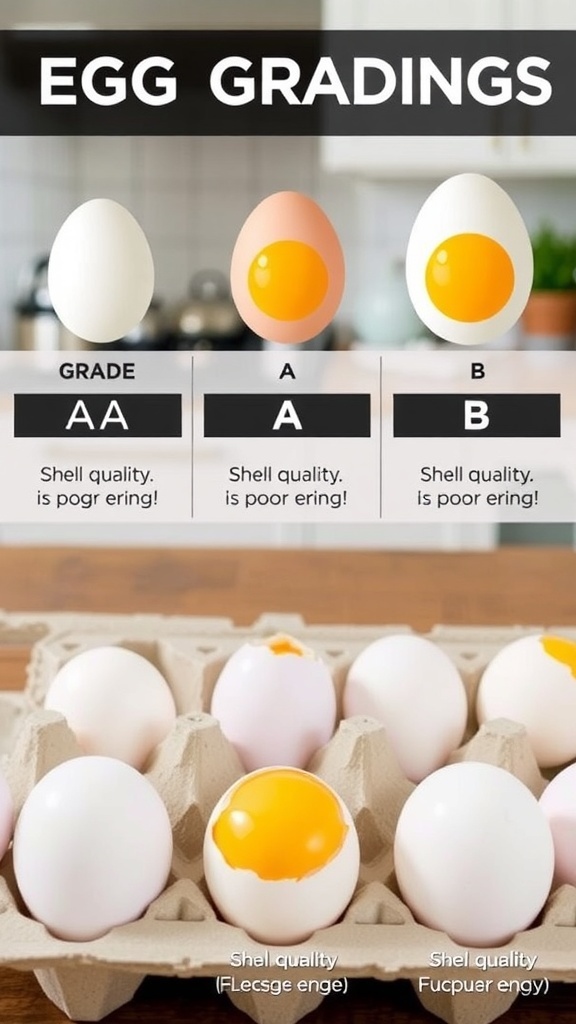
Eggs are graded based on their quality, which is categorized into several grades, including AA, A, and B. Grade AA eggs have the highest quality, featuring firm whites and high, round yolks, while Grade B eggs may have thinner whites and flatter yolks. The grading process also includes checking for any defects in the shell and assessing the overall appearance.
Ingredients
Instructions
Cook and Prep Times
Related
- Understanding Bread Mold: A Diagram for Class 8
- Understanding the 6 Essential Mother Sauces
- Understanding Rice Yield: Maximizing Production Efficiency
- Rice Purity Test: Understanding Your Score and Its Implications