Yeast is a type of fungus that plays a crucial role in various fermentation processes, particularly in baking and brewing. This diagram provides a visual representation of yeast cells, their structure, and their functions.
The diagram highlights key components such as the cell wall, cell membrane, nucleus, and vacuoles, explaining how each part contributes to the yeast’s ability to ferment sugars and produce carbon dioxide and alcohol.
Yeast Cell Structure and Function
This diagram illustrates the anatomy of a yeast cell, showcasing its unique features that enable it to thrive in various environments.
Understanding yeast structure is essential for anyone interested in baking, brewing, or studying microbiology. Yeast cells are single-celled organisms that play a vital role in fermentation, making them indispensable in various culinary and scientific applications.
Key Components of Yeast Cells
The yeast cell is composed of several important structures, each serving a specific function. The cell wall provides protection and shape, while the cell membrane regulates the movement of substances in and out of the cell.
The nucleus, often referred to as the control center, contains the genetic material that governs the cell’s activities. Vacuoles, on the other hand, are storage compartments that hold nutrients and waste products, contributing to the cell’s overall health and functionality.
The Role of the Cell Wall
The cell wall is a critical feature of yeast cells, providing structural support and protection from environmental stressors. It is composed of chitin and glucan, which help maintain the integrity of the cell.
This rigid outer layer not only safeguards the cell but also plays a role in the yeast’s ability to interact with its surroundings, including the absorption of nutrients necessary for growth and fermentation.
Understanding the Cell Membrane
The cell membrane is a semi-permeable barrier that surrounds the yeast cell, controlling the entry and exit of substances. This membrane is essential for maintaining homeostasis within the cell.
It allows essential nutrients to enter while keeping harmful substances out, thus ensuring the yeast can efficiently perform its metabolic functions, including fermentation.
The Importance of the Nucleus
The nucleus is often considered the heart of the yeast cell. It houses the cell’s DNA, which contains the instructions for all cellular processes.
This genetic material is crucial for reproduction and the production of enzymes that facilitate fermentation, making the nucleus a key player in the yeast’s ability to convert sugars into alcohol and carbon dioxide.
Vacuoles and Their Functions
Vacuoles serve multiple purposes within yeast cells. They act as storage units for nutrients, waste products, and other materials necessary for the cell’s survival.
By regulating the internal environment, vacuoles help maintain osmotic balance and contribute to the overall health of the yeast, ensuring it can thrive in various conditions.
Yeast Cell Structure and Function
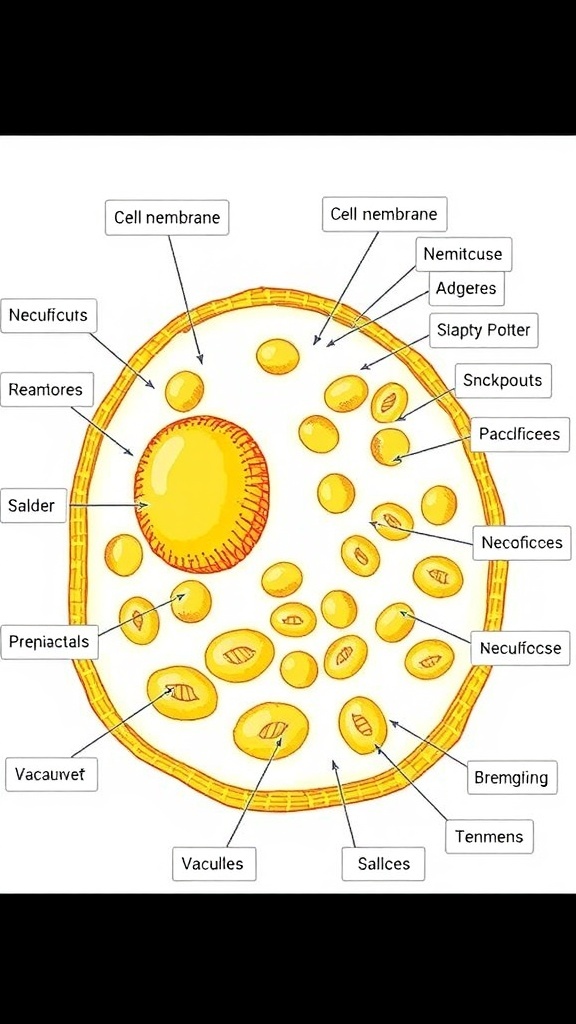
This diagram illustrates the anatomy of a yeast cell, showcasing its unique features that enable it to thrive in various environments. Understanding yeast structure is essential for anyone interested in baking, brewing, or studying microbiology.