Yeast is a vital ingredient in baking, responsible for fermentation and leavening in bread and other baked goods. It is a microorganism that converts sugars into carbon dioxide and alcohol, causing dough to rise and develop flavor.
This article provides an overview of yeast types, their uses in baking, and tips for working with yeast to achieve the best results in your recipes.
Types of Yeast and Their Uses
Yeast plays a crucial role in baking, acting as the driving force behind the fermentation process.
There are three primary types of yeast commonly used: active dry yeast, instant yeast, and fresh yeast.
Each variety has unique characteristics and applications, making it essential to understand their differences for successful baking.
Active Dry Yeast
Active dry yeast is perhaps the most familiar type for home bakers.
This yeast comes in granulated form and requires activation before use.
To activate, it must be dissolved in warm water, allowing the yeast cells to awaken and begin fermentation.
Active dry yeast is ideal for recipes that require longer rising times, as it develops flavor during the fermentation process.
It’s commonly used in bread making, pizza dough, and other yeast-leavened products.
Instant Yeast
Instant yeast, also known as rapid-rise or quick-rise yeast, is another popular option.
It differs from active dry yeast in that it can be mixed directly into dry ingredients without prior activation.
This feature makes it a convenient choice for busy bakers.
Instant yeast works quickly, allowing dough to rise faster than with active dry yeast.
It is perfect for recipes that require a quick turnaround, such as rolls or flatbreads.
Fresh Yeast
Fresh yeast, also known as cake yeast or compressed yeast, is less common but still favored by some bakers.
This type of yeast comes in a moist cake form and has a short shelf life, requiring refrigeration.
Fresh yeast must be crumbled and dissolved in liquid before use.
Many bakers appreciate fresh yeast for its robust flavor and reliable performance.
It is often used in artisanal bread making, where the quality of ingredients is paramount.
Choosing the Right Yeast
When selecting yeast for your baking projects, consider the recipe and the desired outcome.
Active dry yeast is versatile and widely available, making it a safe choice for most recipes.
Instant yeast offers convenience and speed, while fresh yeast can provide a depth of flavor.
Understanding how each type of yeast interacts with other ingredients, such as sugar and flour, can also influence your baking success.
Experimenting with different yeast types can lead to discovering new flavors and textures in your baked goods.
Tips for Working with Yeast
Working with yeast can be straightforward with a few helpful tips.
Always check the expiration date on your yeast package to ensure its potency.
If using active dry yeast, allow it to bloom in warm water before adding it to your dough.
For instant yeast, you can mix it directly with the dry ingredients, but be mindful of the liquid temperature in your recipe.
Keeping your dough in a warm, draft-free environment will promote optimal rising.
Creating a Cozy Baking Atmosphere
Setting the stage for baking can enhance the experience.
A wooden kitchen counter, adorned with bowls of various yeast types, flour, sugar, and other ingredients, creates an inviting scene.
This cozy atmosphere encourages creativity and experimentation in the kitchen.
Gathering your ingredients and tools beforehand can streamline the baking process.
With everything in place, you can focus on the joy of baking and the delightful aromas that will fill your home.
Types of Yeast and Their Uses
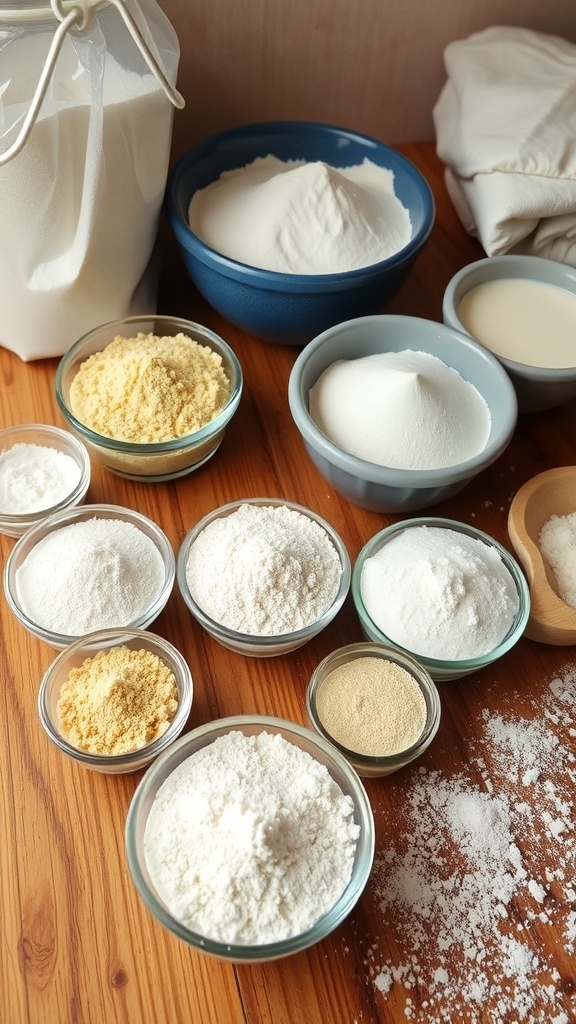
There are several types of yeast, including active dry yeast, instant yeast, and fresh yeast. Each type has its specific applications and requires different handling methods. Understanding these differences can help you choose the right yeast for your baking needs.