Yeast cells are single-celled fungi that play a crucial role in various biological processes, particularly in fermentation and baking. They are known for their ability to convert sugars into alcohol and carbon dioxide, making them essential in the production of bread, beer, and wine.
These microorganisms are widely studied for their unique properties and applications in biotechnology. Yeast cells are also important in scientific research, serving as model organisms for understanding cellular processes.
Understanding Yeast Cells
Yeast cells are fascinating microorganisms that belong to the fungi kingdom. These single-celled organisms are pivotal in various biological processes, especially in fermentation and baking.
They possess the remarkable ability to convert sugars into alcohol and carbon dioxide, which is essential in the production of bread, beer, and wine. The study of yeast cells has opened doors to numerous applications in biotechnology and food science.
Key Characteristics of Yeast Cells
Yeast cells are classified as eukaryotic organisms, characterized by their defined nucleus and organelles. This cellular structure allows them to perform complex functions and adapt to different environments.
One of the most intriguing aspects of yeast biology is their asexual reproduction through a process known as budding. This method enables rapid population growth, making yeast remarkably resilient.
The Cellular Structure of Yeast
Under a microscope, yeast cells exhibit distinct round and oval shapes, which are key identifiers of their species. The cellular structure is intricate, showcasing the nucleus at the center, surrounded by cytoplasm.
The nucleus plays a vital role in regulating cellular activities, including growth and reproduction. Observing these structures provides insight into the fundamental processes that govern life at the microscopic level.
The Budding Process
The budding process is a remarkable feature of yeast reproduction. During this process, a new cell begins to form as a small bud on the parent cell, gradually maturing until it separates.
This method of reproduction not only allows for rapid population increases but also contributes to genetic diversity among yeast strains. Understanding this process is crucial for applications in fermentation and biotechnology.
Scientific Study of Yeast Cells
The study of yeast cells is conducted in laboratory settings, where researchers can observe their behavior and characteristics under controlled conditions. The soft focus of a laboratory background emphasizes the scientific nature of this research.
Through microscopy, scientists can capture detailed images of yeast cells, revealing their unique shapes and structures. This research is essential for advancements in various fields, including food production, biofuel development, and genetic research.
Applications of Yeast Research
Research on yeast cells has far-reaching implications in multiple industries. In food production, understanding yeast behavior can lead to improved fermentation processes, resulting in better quality products.
Moreover, yeast is a model organism in genetic studies, providing insights into cellular processes that are applicable to higher organisms. This versatility makes yeast an invaluable asset in scientific research and industrial applications.
Key Characteristics of Yeast Cells
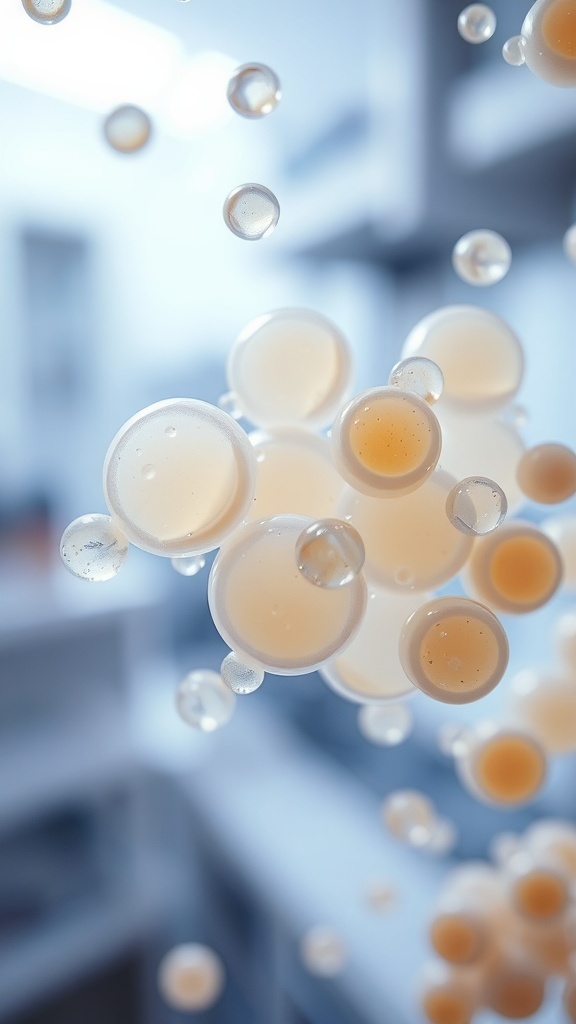
Yeast cells are eukaryotic organisms, meaning they have a defined nucleus and organelles. They reproduce asexually through budding and can thrive in various environments, making them versatile and resilient. Understanding yeast cells is essential for advancements in food production, biofuel development, and genetic research.