Yeast is a crucial ingredient in baking, responsible for fermentation and leavening. Understanding how to measure yeast accurately can significantly impact the texture and flavor of your baked goods.
This guide provides practical information on different types of yeast and their measurements, ensuring successful baking results every time.
Types of Yeast for Baking
Yeast plays a vital role in baking, acting as the leavening agent that helps dough rise.
There are three primary types of yeast used in baking: active dry yeast, instant yeast, and fresh yeast.
Each type has its unique characteristics and usage, making it essential to understand their differences for successful baking.
Active Dry Yeast
Active dry yeast is one of the most commonly used forms of yeast.
It consists of dehydrated granules that need to be activated before use.
Typically, a packet contains about 2 1/4 teaspoons or 7 grams, which is sufficient for most recipes.
To activate active dry yeast, dissolve it in warm water along with a teaspoon of sugar.
This process helps awaken the yeast, allowing it to ferment and produce carbon dioxide, which causes the dough to rise.
Instant Yeast
Instant yeast, also known as rapid-rise or quick-rise yeast, is similar to active dry yeast but has finer granules.
This type of yeast does not require activation in warm water and can be mixed directly with dry ingredients.
Like active dry yeast, a packet typically contains 2 1/4 teaspoons or 7 grams.
Using instant yeast can save time in the baking process, making it a popular choice for many bakers.
It is also known for its ability to rise quickly, which can be beneficial when you’re short on time.
Fresh Yeast
Fresh yeast, often sold in blocks, is a less common form but is favored by some bakers for its robust flavor.
One ounce of fresh yeast is equivalent to about 28 grams.
When using fresh yeast, it’s best to crumble it into the flour or dissolve it in water to ensure even distribution throughout the dough.
Fresh yeast has a shorter shelf life compared to dry yeast, so it’s important to store it in the refrigerator and use it promptly for optimal results.
Measuring Yeast Accurately
Accurate measurement of yeast is crucial for achieving the desired results in baking.
For active dry and instant yeast, using a teaspoon or the packet measurement is straightforward.
When it comes to fresh yeast, weighing it on a kitchen scale ensures precision.
Understanding these measurements can help avoid common baking pitfalls, such as under or over-proofing the dough.
This knowledge is essential for creating light and airy baked goods.
Storing Yeast for Longevity
Proper storage of yeast is key to maintaining its effectiveness.
Both active dry and instant yeast should be kept in a cool, dry place, while fresh yeast requires refrigeration.
Always check expiration dates to ensure the yeast is still active before using it in your recipes.
For longer shelf life, consider storing dry yeast in the refrigerator or freezer.
This practice can extend its usability, allowing you to bake with confidence whenever the craving strikes.
Yeast Measurement Guide
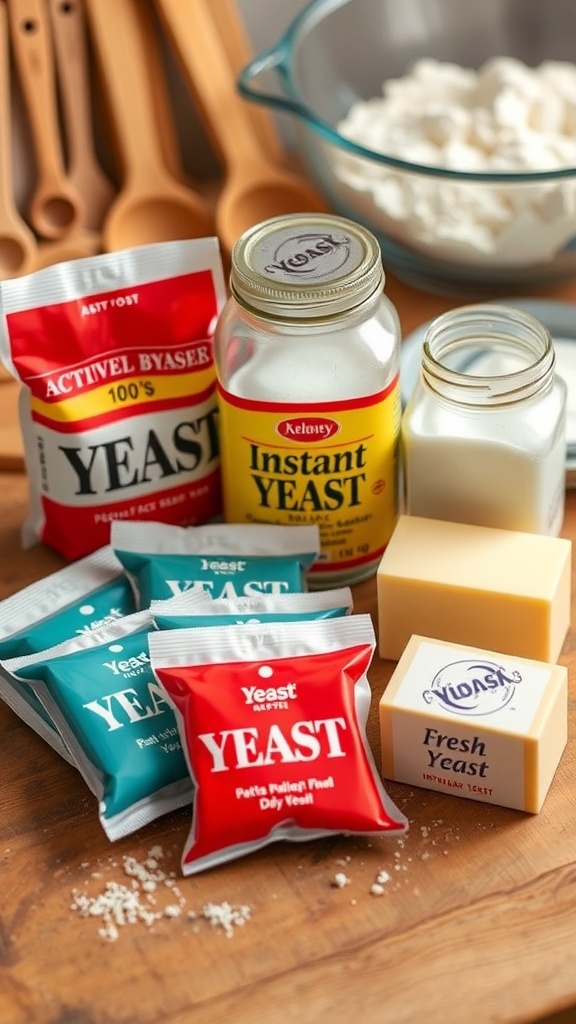
Yeast comes in various forms, including active dry yeast, instant yeast, and fresh yeast. Each type has specific measurement guidelines, typically measured in teaspoons or grams. Knowing how to convert these measurements is essential for precise baking.
Ingredients
- 1 packet of active dry yeast (2 1/4 teaspoons or 7 grams)
- 1 packet of instant yeast (2 1/4 teaspoons or 7 grams)
- 1 ounce of fresh yeast (28 grams)
- 1 teaspoon of sugar (to activate dry yeast)
Instructions
- Measuring Active Dry Yeast: Use a teaspoon to measure out the required amount. If using a packet, it usually contains 2 1/4 teaspoons.
- Measuring Instant Yeast: Similar to active dry yeast, measure with a teaspoon or use a packet.
- Measuring Fresh Yeast: Weigh the yeast on a kitchen scale for accuracy. One ounce equals 28 grams.
- Activating Dry Yeast: If using active dry yeast, dissolve it in warm water with a teaspoon of sugar before adding it to your recipe.
- Storing Yeast: Keep yeast in a cool, dry place or refrigerate for longer shelf life. Always check expiration dates for best results.
Cook and Prep Times
- Prep Time: 5 minutes
- Total Time: 5 minutes
- Servings: Varies based on recipe
- Calories: Negligible per serving