Yeast microorganisms are single-celled fungi that play a crucial role in various fermentation processes, including baking, brewing, and winemaking. They are essential for converting sugars into alcohol and carbon dioxide, which contributes to the texture and flavor of many foods and beverages.
This overview will provide insights into the types of yeast, their functions, and their significance in food production and biotechnology.
Understanding Yeast Microorganisms
Yeast microorganisms are fascinating single-celled fungi that play a vital role in various fermentation processes.
They are essential in transforming sugars into alcohol and carbon dioxide, contributing significantly to the texture and flavor of many foods and beverages.
This overview aims to shed light on the types of yeast, their functions, and their importance in food production and biotechnology.
Key Aspects of Yeast Microorganisms
The most commonly used yeast microorganism in the food industry is Saccharomyces cerevisiae.
This species thrives in sugary environments, making it ideal for various fermentation applications.
Yeast is responsible for the leavening of bread, the production of alcoholic beverages, and the fermentation of numerous foods.
Understanding their biology and applications can lead to enhanced food quality and innovation.
Unique Cellular Structures
Under a microscope, yeast cells exhibit unique cellular structures that are both intriguing and essential for their function.
The round and oval shapes of these cells are distinctive, with some cells budding off from parent cells, showcasing their reproductive process.
The microscopic details reveal a complex world where these microorganisms thrive, contributing to the fermentation processes that are integral to many culinary traditions.
The Role of Yeast in Fermentation
Yeast plays a crucial role in fermentation, a process that has been utilized for centuries in baking, brewing, and winemaking.
During fermentation, yeast converts sugars into alcohol and carbon dioxide, which not only helps in leavening bread but also adds flavor and aroma to beverages.
This transformation is not just a chemical reaction; it is a biological process that highlights the importance of yeast in food production.
The ability of yeast to adapt to different environments makes it a valuable asset in various culinary applications.
Applications of Yeast in Food Production
The applications of yeast extend beyond traditional baking and brewing.
In recent years, yeast has found its way into innovative food products, including plant-based alternatives and functional foods.
By leveraging the unique properties of yeast, food scientists and chefs can create new textures and flavors, pushing the boundaries of culinary creativity.
This adaptability makes yeast an essential ingredient in modern food production.
Conclusion: The Significance of Yeast
In summary, yeast microorganisms are more than just tiny fungi; they are integral to many processes that enhance our food experiences.
From the leavening of bread to the crafting of fine wines, yeast plays a multifaceted role in the culinary world.
Understanding yeast at a microscopic level allows us to appreciate the complexity and significance of these microorganisms, paving the way for future innovations in food science and technology.
Key Aspects of Yeast Microorganisms
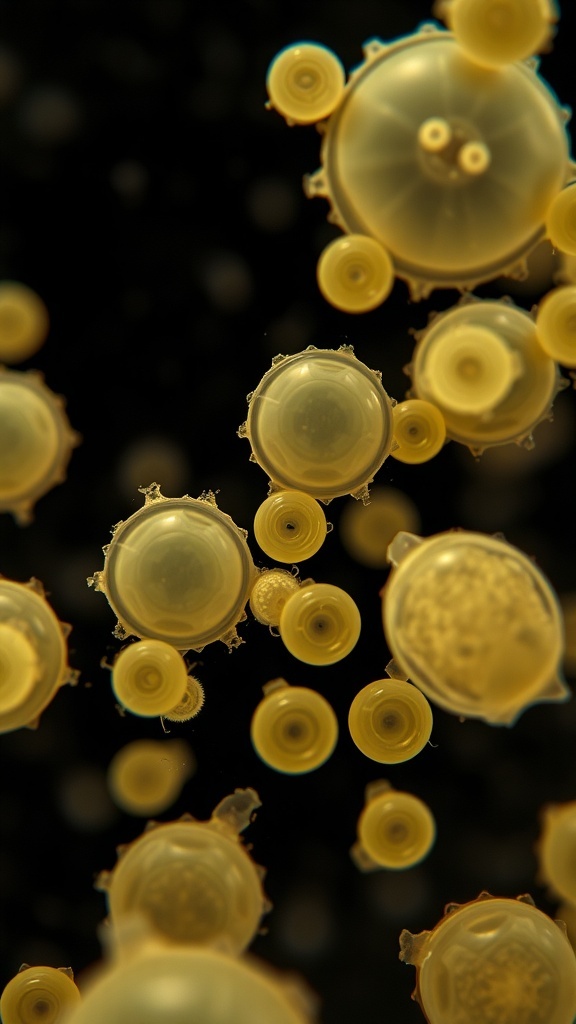
Yeast microorganisms, primarily Saccharomyces cerevisiae, are widely used in the food industry for their fermentation capabilities. They thrive in sugary environments and are responsible for the leavening of bread, the production of alcoholic beverages, and the fermentation of various foods. Understanding their biology and applications can enhance food quality and innovation.