Yeast is a vital ingredient in baking, responsible for fermentation and leavening in bread and other baked goods. This microorganism converts sugars into carbon dioxide and alcohol, creating the airy texture we associate with fresh bread.
There are several types of yeast, including active dry yeast, instant yeast, and fresh yeast, each with its unique properties and uses. Understanding how to properly use yeast can significantly enhance your baking results.
Understanding Yeast in Baking
Yeast plays a pivotal role in the baking process, acting as the driving force behind fermentation and leavening. This tiny microorganism transforms sugars into carbon dioxide and alcohol, resulting in the light and airy texture that characterizes freshly baked bread.
There are various types of yeast available, each with distinct characteristics and applications. Familiarizing yourself with these types can greatly improve your baking outcomes and help you choose the right one for your recipes.
Types of Yeast and Their Uses
Active dry yeast is perhaps the most familiar type for home bakers. It requires activation in warm water before use, which helps to awaken the dormant yeast cells. This process is essential for ensuring that the yeast is alive and ready to work its magic in your dough.
Instant yeast, on the other hand, is known for its convenience. It can be mixed directly into dry ingredients without the need for prior activation. This type of yeast is favored for its quick action, allowing for faster rise times and streamlined baking processes.
Fresh yeast, while less commonly used in home kitchens, offers a unique flavor profile that many professional bakers appreciate. It is often crumbled into the flour mixture and dissolved in warm water, providing a rich taste that can enhance the overall quality of baked goods.
How to Activate Different Types of Yeast
To activate active dry yeast, dissolve it in warm water (around 110°F/43°C) along with a pinch of sugar. Allow the mixture to sit for about 5-10 minutes until it becomes frothy, indicating that the yeast is ready to use.
For instant yeast, simply mix it with your dry ingredients. There’s no need for activation, making it a time-saving option for busy bakers.
When using fresh yeast, crumble it into your flour mixture and add warm water to dissolve it. This method ensures that the yeast is evenly distributed throughout the dough, promoting a consistent rise.
Choosing the Right Yeast for Your Recipe
The choice of yeast can significantly affect the texture and flavor of your baked goods. Active dry yeast is versatile and works well for most recipes, particularly those that require longer fermentation times.
Instant yeast is ideal for quick breads and recipes that require a fast turnaround. Its ability to be mixed directly with dry ingredients makes it a favorite among those looking to save time.
Fresh yeast is often preferred in artisan baking, where the depth of flavor is paramount. While it may require a bit more effort to handle, the results can be well worth it for those seeking a gourmet touch.
Storage and Shelf Life of Yeast
Proper storage of yeast is essential for maintaining its potency. Active dry and instant yeast should be kept in a cool, dry place, ideally in an airtight container. Once opened, they can be stored in the refrigerator to prolong their shelf life.
Fresh yeast, being more perishable, should be used within a couple of weeks and kept refrigerated. It can also be frozen for longer storage, but be sure to check its viability before use.
Conclusion: The Importance of Yeast in Baking
Understanding the different types of yeast and their applications can greatly enhance your baking skills. Whether you opt for active dry, instant, or fresh yeast, knowing how to use them effectively will lead to better results in your kitchen.
Experimenting with these various types can open up new possibilities in your baking endeavors, allowing you to create delicious and airy breads that are sure to impress.
Types of Yeast and Their Uses
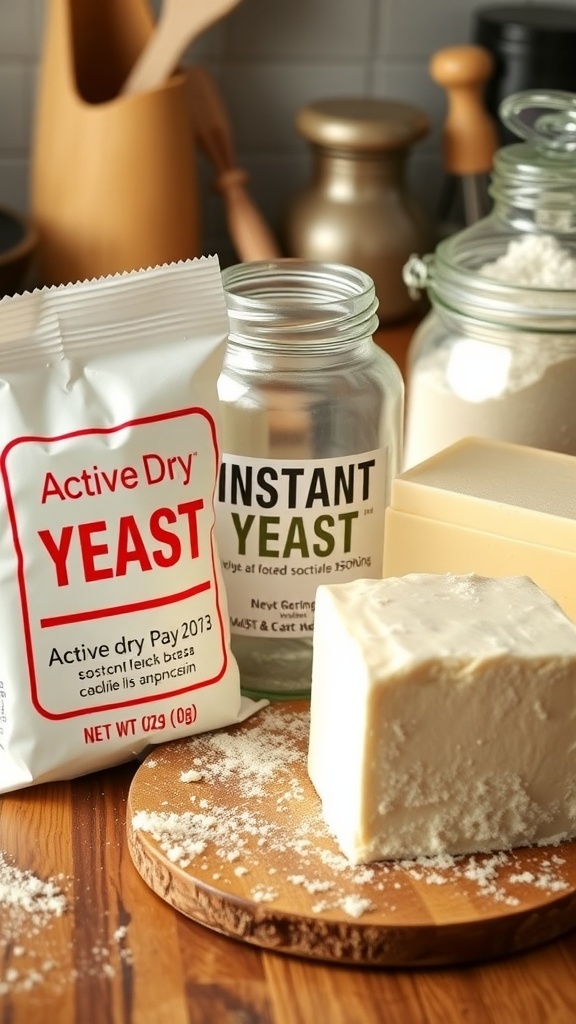
Active dry yeast is the most commonly used type, requiring activation in warm water before use. Instant yeast can be mixed directly into dry ingredients and is known for its quick action. Fresh yeast, while less common, offers a rich flavor and is often used in professional baking.
Ingredients
- Active dry yeast
- Instant yeast
- Fresh yeast
- Sugar (for activation)
- Warm water (for activation)
Instructions
- Activate Active Dry Yeast: Dissolve the yeast in warm water (about 110°F/43°C) with a pinch of sugar. Let it sit for 5-10 minutes until frothy.
- Use Instant Yeast: Mix instant yeast directly with dry ingredients without activation.
- Incorporate Fresh Yeast: Crumble fresh yeast into the flour mixture and add warm water to dissolve.
Cook and Prep Times
- Prep Time: 5 minutes
- Total Time: 5-10 minutes (for activation)
- Servings: Varies based on recipe
- Calories: Approximately 10 calories per teaspoon of dry yeast