The angle, or pitch, of stairs is an important consideration in the design and construction of staircases. It determines how steep or shallow the stairs will be, which in turn affects their safety, comfort, and usability. The angle of stairs is typically measured as the rise and run, which refer to the vertical height and horizontal depth of each step, respectively. In general, there are building codes and guidelines that provide recommendations for the angle of stairs in various settings, such as residential buildings, commercial buildings, and public spaces. However, the optimal angle of stairs can vary depending on several factors, including the intended use, the available space, and the user population. In this article, we will explore the different considerations and factors that affect the angle of stairs in order to provide a comprehensive understanding of this topic.
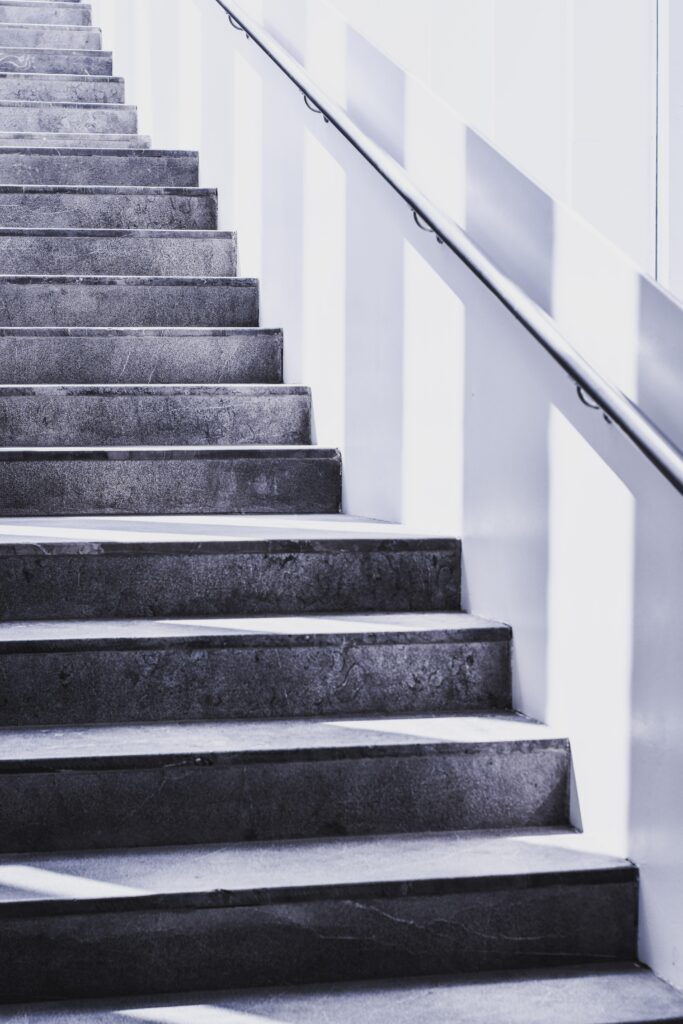
One of the primary considerations when determining the angle of stairs is safety. Stairs that are too steep can pose a risk of accidents and falls, while stairs that are too shallow can be uncomfortable and difficult to use. Building codes and guidelines often specify maximum and minimum values for the angle of stairs to ensure safety. In the United States, for example, the International Building Code (IBC) provides guidelines for stair design in commercial and residential buildings. According to the IBC, the maximum riser height (vertical height of each step) is typically limited to 7.75 inches (197 mm), and the minimum run (horizontal depth of each step) is typically set at 10 inches (254 mm). These values result in a maximum angle of approximately 37 degrees, which is considered a safe and comfortable range for most people to ascend and descend stairs without undue strain or risk of tripping.
Another factor that affects the angle of stairs is the intended use of the staircase. Stairs in residential buildings, for example, may have different requirements compared to stairs in commercial or public buildings. Residential stairs are typically designed with a focus on comfort and aesthetics, while stairs in commercial or public buildings may have stricter safety requirements due to higher levels of foot traffic and the need to accommodate a diverse range of users, including people with disabilities. For instance, the Americans with Disabilities Act (ADA) in the United States provides guidelines for accessibility in public buildings, including requirements for the angle of stairs. According to the ADA, the maximum riser height for accessible stairs is limited to 4.5 inches (114 mm), and the minimum run is set at 11 inches (279 mm), resulting in a maximum angle of approximately 32 degrees. This ensures that stairs are easily navigable for individuals with mobility impairments, such as those who use wheelchairs or walkers.
The available space for the stairs also plays a role in determining the angle of stairs. In some cases, the available space may be limited, such as in narrow hallways or tight corners. In such situations, the angle of stairs may need to be adjusted to fit within the available space while still maintaining safety and usability. For example, in tight spaces, a steeper angle with smaller riser height and run may be necessary to accommodate the stairs within the available footprint. However, it’s important to note that excessively steep stairs can be uncomfortable and unsafe, and should be avoided whenever possible. Designers and architects should carefully consider the available space and balance it with safety and comfort requirements to arrive at an optimal angle for the stairs.
The user population is another important factor to consider when determining the angle of stairs. Different users may have varying levels of mobility, strength, and comfort, which can affect their ability to navigate stairs safely. For example, older adults or individuals with disabilities may require shallower stairs with smaller riser height and larger run to make it easier for them to ascend and descend. On the other hand, younger and more able-bodied individuals may be able