There are several animals that have two feet and cannot walk, including birds, kangaroos, and penguins. However, I will focus on the penguin as the primary example.
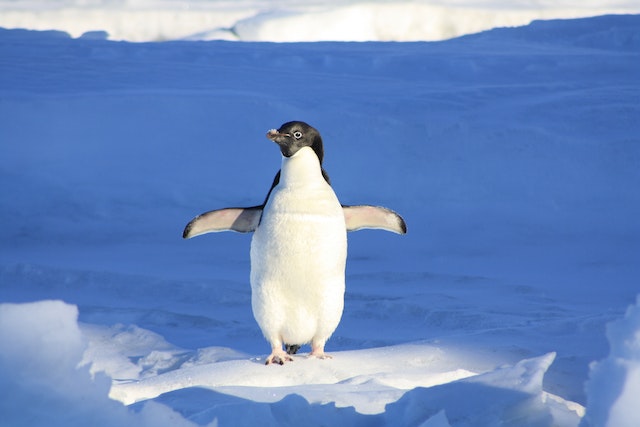
Penguins are a group of flightless birds that are adapted to life in aquatic environments, such as the Southern Ocean and Antarctica. They have a unique morphology that sets them apart from other birds, including their wings, which have evolved into flippers that are used for swimming instead of flying.
While penguins do have two feet, they are not designed for walking in the traditional sense. Instead, penguins waddle on their two feet, which are short and stubby, with their knees close to their bodies. This posture makes it easier for penguins to balance their weight and move forward on the ice, but it also makes walking difficult.
Penguins’ feet are also covered in thick scales that help protect them from the cold and provide a better grip on slippery surfaces. These scales are so tough that they can even withstand the harsh Antarctic climate, which can reach temperatures as low as -40°C.
Despite their inability to walk, penguins are highly adapted to life in their aquatic environments. They are excellent swimmers and divers, with streamlined bodies that allow them to move quickly through the water. Penguins can swim at speeds of up to 15 miles per hour (24 kilometers per hour) and dive to depths of over 500 feet (152 meters) to catch fish and other prey.
In addition to their flippers and scales, penguins have several other adaptations that help them survive in their unique environment. For example, they have a thick layer of blubber under their skin that helps insulate them from the cold, and they can regulate their body temperature by adjusting the blood flow to their extremities.
Penguins also have a highly developed social structure that helps them survive in the harsh Antarctic environment. They form large colonies, sometimes consisting of thousands of birds, that huddle together for warmth and protection from the wind. Within these colonies, penguins have complex social interactions and use a variety of vocalizations and displays to communicate with one another.
Overall, while penguins may not be able to walk in the traditional sense, they are highly adapted to life in their aquatic environments. Their unique morphology, including their flippers and thick scales, allows them to move efficiently through the water, while their thick layer of blubber and social structure help them survive in the harsh Antarctic climate.