The color of a flame can reveal important information about the temperature and chemical composition of the material burning. Flames are typically seen as shades of yellow, orange, and red, but under certain conditions, they can turn purple or even blue. In this answer, we will explore what causes purple flames in a fire.
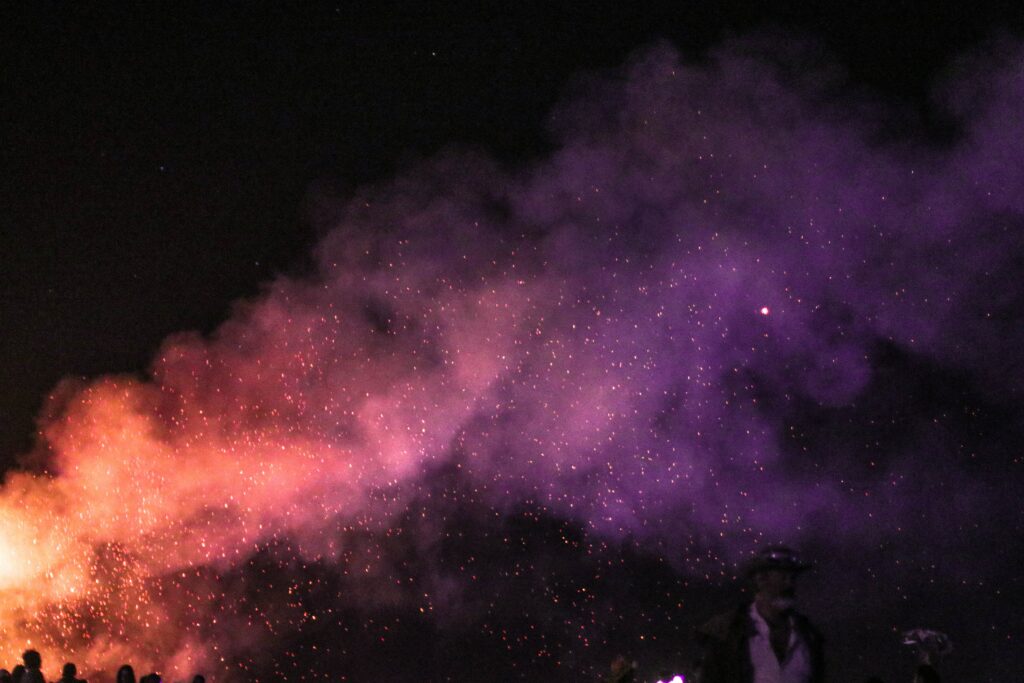
Firstly, it is important to understand that the color of a flame is determined by the temperature of the fire and the chemicals present in the burning material. When a substance is heated, it gives off light energy in the form of photons. The color of the light emitted depends on the energy level of the photons. At lower temperatures, photons with lower energy levels are emitted, which our eyes perceive as red or orange. At higher temperatures, photons with higher energy levels are emitted, which appear as blue or even purple.
There are a few possible causes for purple flames in a fire:
- Potassium: One of the most common sources of purple flames is potassium. When potassium burns, it emits a purple or lilac-colored flame. This is often seen in fireworks, where potassium compounds are used to create the purple hues.
- Copper: Copper is another element that can produce a purple flame. When copper is heated to a high temperature, it emits a bluish-green flame, which can appear purple depending on the conditions.
- Wood: Certain types of wood, such as pine or birch, can also produce a purple flame. This is due to the presence of chemicals in the wood, such as terpenes, which can cause the flame to take on a purple hue.
- Other chemicals: Other chemicals, such as magnesium or mercury, can also produce purple flames under certain conditions.
It is worth noting that the color of a flame is not always a reliable indicator of the materials being burned. For example, propane, which is often used in gas grills, produces a blue flame, even though it contains no copper or potassium. Similarly, natural gas produces a yellow flame, despite containing no sodium, which is often associated with yellow flames.
In summary, purple flames in a fire can be caused by a variety of factors, including the presence of potassium or copper, certain types of wood, and other chemicals. By understanding the chemistry behind flame color, we can learn more about the materials being burned and the conditions under which the fire is burning.
conclusion
In conclusion, the color of a flame is determined by the temperature and chemical composition of the burning material. Purple flames in a fire can be caused by the presence of certain chemicals, such as potassium or copper, or certain types of wood that contain specific chemicals like terpenes. While the color of a flame can give important information about the material being burned, it is not always a reliable indicator and can be influenced by other factors as well. Understanding the chemistry behind flame color can provide insights into the conditions of the fire and the materials involved.