The color of a fire can vary depending on several factors, including the temperature of the flames and the materials being burned. In general, hotter fires tend to burn blue or white, while cooler fires burn yellow or orange.
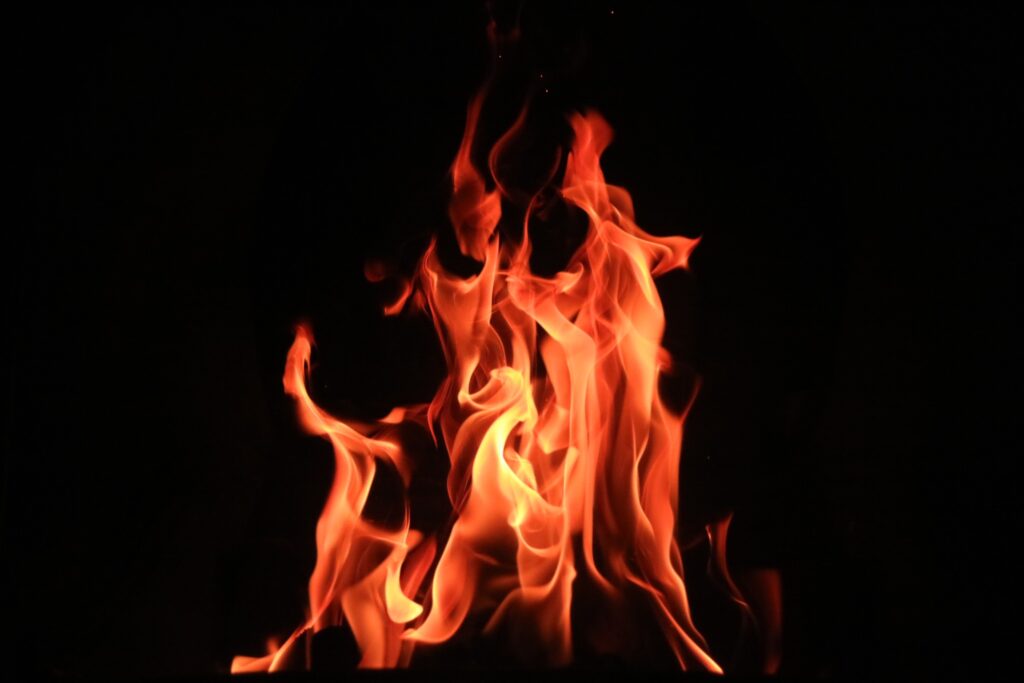
The color of a fire is determined by the temperature of the flames and the chemical composition of the materials being burned. When a material is heated, it releases energy in the form of light. This light can be seen as a flame, and the color of the flame depends on the temperature of the material.
At the lower end of the temperature scale, fires tend to burn yellow or orange. This is because the cooler flames are not releasing as much energy in the form of light. The light that is emitted tends to be in the yellow or orange part of the spectrum, which gives the flames their characteristic color.
As the temperature of the fire increases, the flames start to burn blue or white. This is because the hotter flames are releasing more energy in the form of light, including light that falls in the blue and white parts of the spectrum.
The hottest flames, such as those found in a blowtorch or welding torch, can burn at temperatures of up to 2,400 degrees Celsius (4,352 degrees Fahrenheit). At these temperatures, the flames can appear almost white in color, as the energy being released is mostly in the form of light in the blue and white parts of the spectrum.
It is important to note, however, that the color of a fire can also be affected by the materials being burned. For example, fires fueled by wood or paper tend to burn yellow or orange, while fires fueled by propane or natural gas tend to burn blue. This is because the chemical composition of the fuel affects the temperature and color of the flames.
In conclusion, the color of a fire depends on several factors, including the temperature of the flames and the chemical composition of the materials being burned. In general, hotter fires tend to burn blue or white, while cooler fires burn yellow or orange. However, the color of a fire can also be affected by the materials being burned, and it is important to consider this when trying to determine the temperature of a fire based on its color.