Clogged pores are a common skin condition that occurs when the openings of hair follicles on the skin’s surface become blocked with debris, such as oil, dead skin cells, and dirt. Clogged pores can appear on various parts of the body, including the face, neck, chest, back, and shoulders. They can manifest in different ways depending on the severity and type of clog, and may present differently in different skin types and individuals.
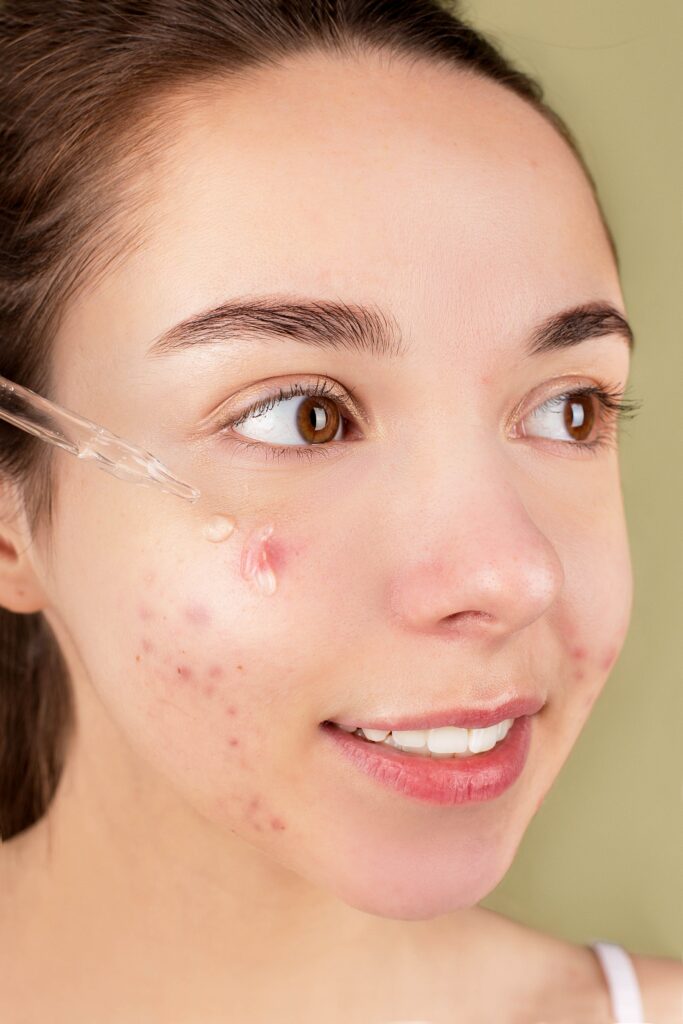
One common type of clogged pores is called comedones, which are further categorized as open comedones (blackheads) and closed comedones (whiteheads). Open comedones, as the name suggests, have an open surface that appears dark or black. The dark color is not due to dirt, but rather oxidized melanin, the pigment responsible for skin color. When the hair follicle becomes clogged with excess sebum (oil), dead skin cells, and bacteria, it forms a plug that is exposed to air, which causes oxidation and darkens the comedone. Open comedones are typically seen on the nose, chin, and forehead, and may be small or larger in size. They may have a slightly raised appearance and can sometimes be mistaken for small black specks or dirt on the skin.
Closed comedones, on the other hand, are not exposed to air and remain closed beneath the skin’s surface. They appear as small, flesh-colored or slightly whitish bumps on the skin. Closed comedones can be harder to detect compared to blackheads, as they do not have an open surface and may not be easily squeezed or extracted. They are often found in areas with more hair follicles, such as the cheeks, temples, and jawline.
In addition to comedones, clogged pores can also manifest as papules and pustules. Papules are small, raised bumps that are usually pink or red in color and do not contain pus. They can be tender to touch and may appear inflamed. Pustules, on the other hand, are similar in size to papules but contain pus, which gives them a yellow or white appearance. Pustules are often red around the base and may be surrounded by inflammation. Both papules and pustules can be a result of clogged pores that have become infected or inflamed.
Clogged pores can also lead to the formation of nodules and cysts, which are more severe types of acne lesions. Nodules are larger, deep-seated bumps that can be painful and tender to touch. They are usually firm to the touch and do not contain pus. Nodules can cause scarring and are often more difficult to treat compared to other types of acne lesions. Cysts, on the other hand, are even larger and deeper than nodules and are typically filled with pus. They can be soft and fluctuant to the touch and are often very painful. Cysts can cause significant scarring and may require medical intervention for proper treatment.
Apart from these visible characteristics, clogged pores can also lead to other skin issues, such as enlarged pores and uneven skin texture. When the hair follicle remains clogged for an extended period of time, it can stretch and enlarge the pore’s opening, making it more visible on the skin’s surface. Enlarged pores can give the skin a rough, uneven appearance, and may also be more prone to trapping debris, leading to further clogging. Over time, clogged pores can also contribute to the formation of post-inflammatory hyperpigmentation (PIH), which are dark spots or patches that can persist even after the clog has been resolved. PIH can be a result of the skin’s inflammatory response to the clogged pores and can take time to fade.
In conclusion, clogged pores can present in various ways depending