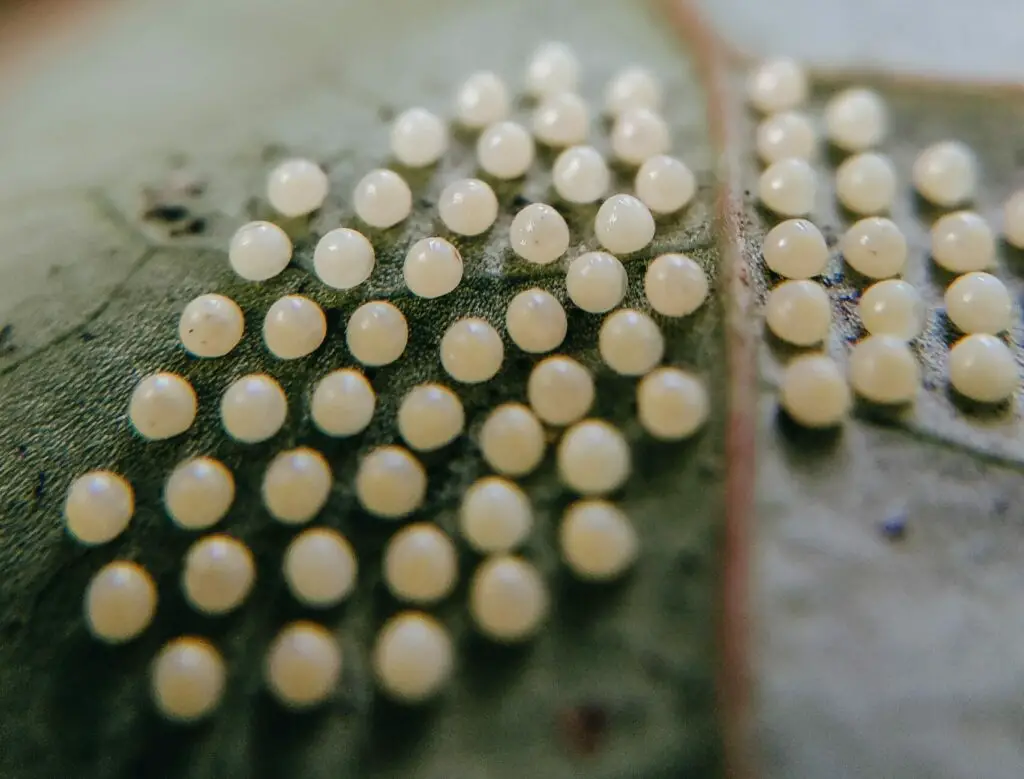
Flea eggs are the first stage in the life cycle of a flea, and they are tiny, oval-shaped, and usually white or off-white in color. Measuring only about 0.5 millimeters in length, flea eggs are barely visible to the naked eye and often go unnoticed. Despite their small size, they play a crucial role in the reproduction and survival of fleas. They are responsible for creating the next generation of these blood-sucking parasites.
Flea eggs are typically laid by adult female fleas. Which are known for their ability to reproduce rapidly and in large numbers. Female fleas can lay hundreds of eggs in their lifetime. Typically depositing them on the host animal, such as a dog or a cat. In the environment where the host spends a significant amount of time, such as the bedding, carpets, or furniture. This allows fleas to infest not only the host but also the surrounding areas, making them difficult to eradicate.
Flea eggs have a distinctive appearance that can be described as small, oval-shaped, and pearly white. They are usually smooth, with a shiny surface, and have a slightly elongated shape with rounded ends. The color of flea eggs can vary depending on various factors. Such as the age of the egg and the environment in which it is laid. Freshly laid flea eggs are typically translucent and may appear almost transparent. But they quickly harden and become more opaque as they age.
One of the reasons why flea eggs are challenging to detect is that they are tiny and often blend in with their surroundings. They can easily be mistaken for dandruff flakes, dust particles, or other debris, especially on light-colored surfaces. However, if you look closely, you may notice that flea eggs have a more uniform shape and a slightly glossy appearance compared to typical debris.
Flea eggs are equipped with a hard outer shell called the chorion. Which serves as a protective barrier against environmental conditions and predators. The chorion is made of a protein-rich material that provides structural integrity to the egg. It helps it withstand desiccation, or drying out. This tough shell makes flea eggs resistant to many common household insecticides. Allows them to survive in the environment for several days to weeks, depending on the conditions.
Underneath the chorion, the flea egg contains a developing larva. The larva is a legless, worm-like creature. That feeds on organic matter, such as flea feces and other debris, in the environment. The larva grows and molts through several stages before eventually forming a cocoon and entering the pupal stage, from which an adult flea emerges. This entire life cycle, from egg to adult, can take as little as two to three weeks, depending on the temperature, humidity, and availability of food.
It’s important to note that flea eggs are not capable of jumping or moving on their own. They rely on external factors, such as the movement of the host animal or airflow, to disperse in the environment and find suitable places to hatch into larvae. This is why fleas tend to congregate in areas where pets spend a lot of time, as it provides a conducive environment for the eggs to hatch and complete their life cycle.
To control flea infestations, it’s crucial to break the life cycle at multiple stages, including the eggs. Regular vacuuming, washing pet bedding and other infested items in hot water, and treating pets with veterinarian-approved flea control products can help prevent flea eggs from hatching and developing into adult fleas. It’s also essential to maintain good hygiene and cleanliness in the home, especially in areas where pets frequent, to minimize the chances of flea eggs hatching and causing an infestation.
In conclusion, flea eggs are tiny, oval-shaped.