Poorly healed tattoos can have various appearances and are typically characterized by irregularities or imperfections in the skin where the tattoo was placed. These imperfections can result from several factors, including inadequate aftercare, inexperienced tattooing techniques, and individual differences in how the body heals.
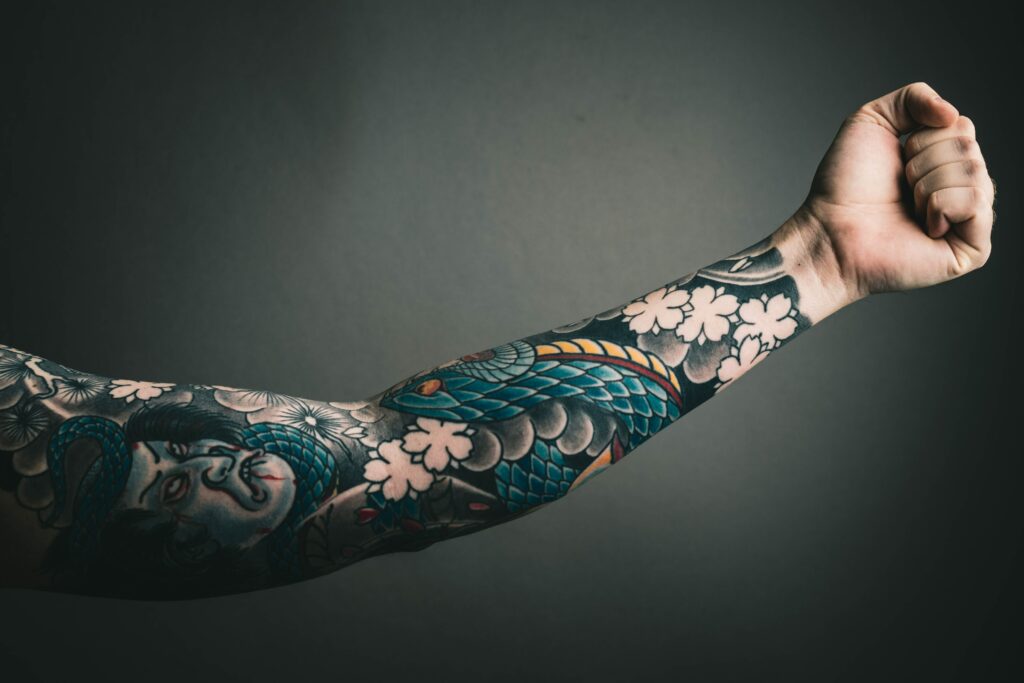
One common issue with poorly healed tattoos is uneven coloration. When a tattoo is not healed properly, the color may appear patchy or faded in some areas, while being overly saturated or dark in others. This can happen due to improper ink saturation during the tattooing process or incorrect aftercare, such as excessive exposure to water or sunlight, which can cause the ink to spread or fade unevenly. In some cases, the color may also appear dull or washed out, instead of vibrant and clear.
Another issue with poorly healed tattoos is blurry or fuzzy lines. Tattoos are created by inserting ink into the skin through small punctures, and if the skin does not heal properly, the lines may become blurred or distorted. This can happen if the tattoo artist uses too much pressure or moves the needle too quickly during the tattooing process, leading to an unclear design. Additionally, if the tattoo is not cared for properly during the healing process, scabs or crusts may form over the tattoo, and if these are picked or scratched off, it can result in blurred lines or a distorted image.
Scarring is another potential outcome of a poorly healed tattoo. Scarring can occur if the skin is damaged during the tattooing process, or if the tattoo is not allowed to heal properly. Scarring can manifest as raised or indented areas of the skin, and it can alter the appearance of the tattoo design. Scarring is more likely to occur in individuals with a history of keloids or hypertrophic scars, which are types of abnormal scars that form when the body produces too much collagen during the healing process.
Infections are a serious concern with poorly healed tattoos. If proper hygiene and aftercare instructions are not followed, the risk of infection increases. Infections can cause the skin to become red, swollen, and warm to the touch, and they may also produce pus or other fluids. In severe cases, infections can lead to systemic symptoms such as fever and chills. When an infection occurs in a healing tattoo, it can cause damage to the skin and disrupt the healing process, resulting in a poorly healed tattoo with potentially permanent damage to the skin and design.
Additionally, a poorly healed tattoo may result in raised or hypertrophic scars. These types of scars occur when the body produces an excess amount of collagen during the healing process, causing the scar tissue to rise above the surrounding skin. Raised scars can be itchy, uncomfortable, and may take a long time to fade or resolve. They can also distort the appearance of the tattoo design and make it look uneven or distorted.
Peeling or flaking of the skin is a normal part of the tattoo healing process, but if this occurs excessively or too early, it can result in a poorly healed tattoo. If the tattooed skin is picked, scratched, or subjected to harsh rubbing during the peeling or flaking stage, it can cause the ink to be pulled out of the skin or result in scarring, leading to an uneven or distorted tattoo.
In some cases, a poorly healed tattoo may also result in color changes. For example, the tattoo may fade or change color over time due to sun exposure, aging, or other factors. Additionally, if the tattoo was not properly protected from UV radiation during the healing process, it may be more prone to fading or color changes in the future.
Overall, poorly healed tattoos can have various appearances, including uneven coloration, blurry lines, scarring, infections, raised or hypertrophic scars, peeling or flaking, and color changes.