The color of the sky can tell us a lot about the atmosphere and the environment around us. The sky typically appears blue during the day and black at night, but there are also times when it can take on different colors, such as purple. When the sky appears purple, it can be a striking and unusual sight that can leave people wondering what it means.
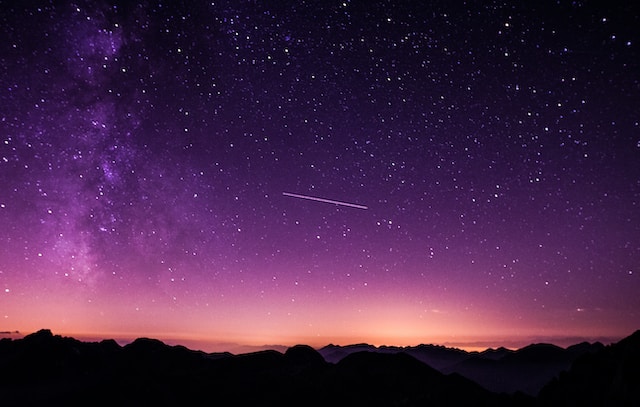
There are several reasons why the sky may appear purple, and these can vary depending on the time of day, weather conditions, and other factors. One of the most common reasons why the sky may appear purple is during sunrise or sunset. As the sun moves closer to the horizon, the light must pass through more of the Earth’s atmosphere, which can scatter the light and cause it to take on a reddish or purple hue.
This phenomenon is known as Rayleigh scattering, and it occurs because the Earth’s atmosphere contains tiny particles such as dust, water droplets, and nitrogen and oxygen molecules. These particles scatter the light in different directions, and shorter wavelengths such as blue and green light are scattered more easily than longer wavelengths such as red and purple light. This is why the sky appears red or purple during sunrise and sunset, as the shorter blue and green wavelengths are scattered away, leaving behind the longer red and purple wavelengths.
Another reason why the sky may appear purple is due to the presence of pollution or other particles in the atmosphere. When there are high levels of pollution, such as smog or smoke from wildfires, the particles in the air can absorb and scatter the light, causing it to take on a purple hue. This is often seen in urban areas with high levels of air pollution, where the sky can appear hazy and purple.
In some cases, the sky may also appear purple due to weather conditions such as thunderstorms or tornadoes. When there are high levels of moisture and turbulence in the air, it can cause the light to refract in unusual ways, leading to a purple or pinkish glow in the sky. This is often seen before or after severe weather events, and can be a warning sign of impending storms or other dangerous conditions.
The color of the sky can also be influenced by the angle of the sun and the position of the observer. For example, if you are standing in a shaded area while the sun is shining on a nearby mountain or other object, the reflected light can cause the sky to take on a purple or pinkish hue. Similarly, if the sun is low on the horizon and shining through a dense forest or other area with a lot of foliage, the green of the trees can mix with the reddish or purple light, causing the sky to appear a similar color.
In some cases, the color of the sky may also be influenced by atmospheric phenomena such as auroras or other natural light displays. When charged particles from the sun interact with the Earth’s magnetic field, they can create colorful displays of light in the sky, including purple and green hues. These displays are often seen in northern or southern latitudes, and can be a breathtaking sight for those lucky enough to witness them.
In conclusion, the color of the sky can vary depending on a range of factors, including the time of day, weather conditions, pollution levels, and the angle of the sun. When the sky appears purple, it can be a striking and unusual sight that can leave people wondering what it means. However, in most cases, the purple color is simply a result of the way that light interacts with the Earth’s atmosphere, and does not necessarily indicate any particular danger or unusual phenomenon.