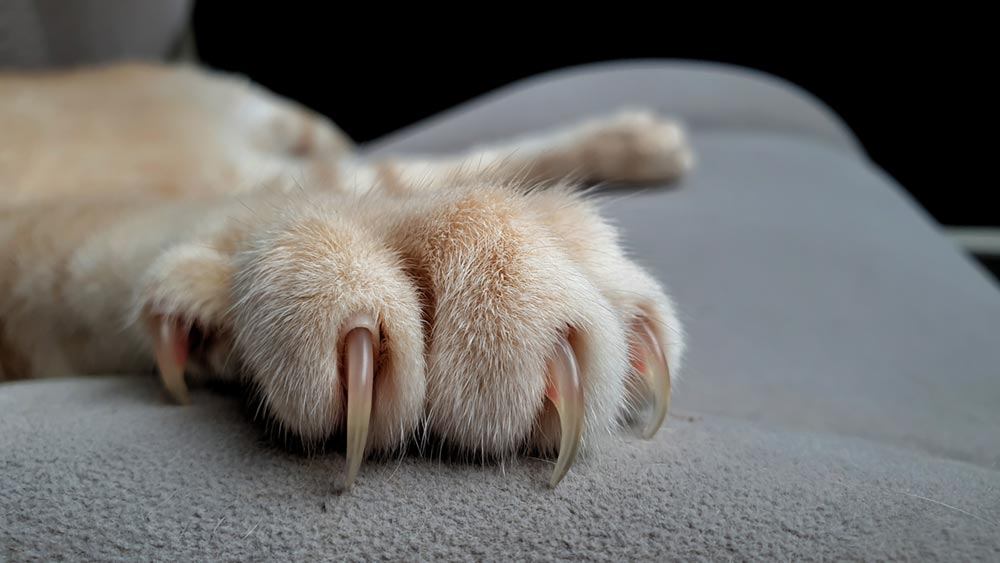
If you don’t trim your cat’s nails, several issues can arise, including discomfort for the cat, damage to furniture and other household items, and an increased risk of injury to both you and your feline companion
.
Here are some of the potential consequences of not trimming your cat’s nails:
- Discomfort for your cat: If your cat’s nails become too long, they can start to curl and grow into the paw pads, causing pain and discomfort. Overgrown nails can also lead to arthritis, as they can cause the cat to shift their weight unnaturally to avoid putting pressure on their feet.
- Damage to furniture and other household items: If your cat’s nails are too long, they can easily get caught on carpets, upholstery, and other fabrics in your home, causing damage. They can also scratch and damage furniture, walls, and doors.
- Increased risk of injury: Long nails can be dangerous for your cat and for you. Cats with long nails can easily get them caught on things, leading to painful injuries. Additionally, if your cat is prone to scratching or biting, long nails can make their attacks more dangerous and more likely to result in injury.
- Difficulty walking: Cats with long nails can have difficulty walking and jumping, which can lead to a decrease in activity levels and weight gain. This is especially true for older cats, who may already be experiencing joint pain and stiffness.
- Infection: If your cat’s nails become too long, they can start to collect dirt and bacteria, which can lead to infections in the nail bed. This can be painful and may require medical attention.
- Behavioral issues: Cats with long nails may be more likely to engage in destructive behaviors, such as scratching furniture or walls. They may also be less likely to want to be held or petted, as their long nails can make them feel uncomfortable or insecure.
- Difficulty with grooming: Long nails can make it difficult for cats to groom themselves properly, leading to matted fur and other grooming issues. This can be especially problematic for cats with long hair, as their fur can become tangled and matted if they can’t groom themselves properly.
To avoid these issues, it’s important to trim your cat’s nails regularly. Most cats will need their nails trimmed every 4-6 weeks, although some may need it more frequently if their nails grow quickly or if they are not able to wear them down naturally.
Here are some tips for trimming your cat’s nails:
- Use proper nail clippers: You can purchase special nail clippers designed specifically for cats at most pet stores. Make sure to choose clippers that are the appropriate size for your cat’s nails.
- Hold your cat securely: It’s important to hold your cat securely while trimming their nails to avoid injury to yourself or your cat. You can wrap your cat in a towel or blanket to keep them calm and secure.
- Be gentle: When trimming your cat’s nails, be gentle and avoid cutting too close to the quick (the pink part of the nail that contains blood vessels and nerves). If you do accidentally cut the quick, your cat may bleed and experience pain.
- Reward your cat: After trimming your cat’s nails, give them a treat or some extra attention to reward them for their good behavior. This will help your cat associate nail trimming with positive experiences.
In summary, if you don’t trim your cat’s nails, it can lead to a range of issues, including discomfort for your cat, damage to furniture and other household items, and an increased risk of injury. To avoid these problems, it’s important to trim your cat’s nails regularly using proper nail clippers and gentle handling techniques. With proper care, your cat’s nails can be kept healthy and manageable, allowing them