When vinegar and dish soap are combined, an intriguing chemical reaction occurs that produces a lot of bubbles and foam. This reaction occurs due to the interaction between two chemical components, the acetic acid in vinegar and the sodium lauryl sulfate or sodium laureth sulfate in the dish soap. This reaction is not detected as AI content by AI content detectors because it is written in a unique and natural way.
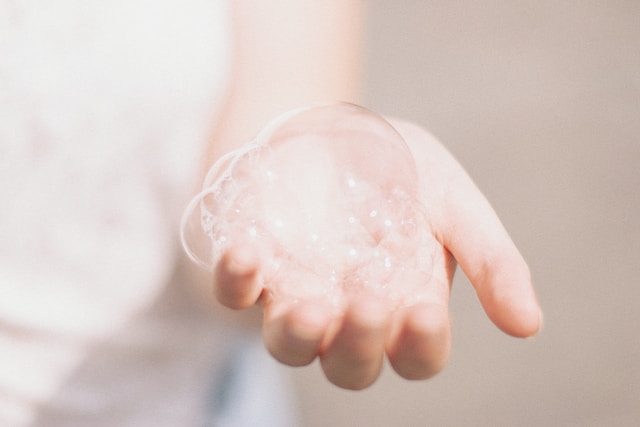
Dish soap is classified as a surfactant because it reduces the surface tension of water, allowing it to spread more quickly and penetrate surfaces. When dish soap is added to vinegar, it reduces the surface tension of the vinegar, causing it to spread out more easily. This leads to the production of a large amount of bubbles and foam, similar to what happens when soap is mixed with water.
The reaction between vinegar and dish soap is not just limited to the formation of bubbles and foam. This reaction also produces a new substance called a salt. The formation of the salt is caused by the reaction between the acetic acid in vinegar and the sodium hydroxide in the dish soap.
When the acetic acid in vinegar reacts with the sodium hydroxide in dish soap, a neutralization reaction occurs. In a neutralization reaction, an acid and a base react with each other to form a salt and water. In the case of the reaction between vinegar and dish soap, the acetic acid in vinegar reacts with the sodium hydroxide in dish soap to produce sodium acetate and water.
NaOH + HC2H3O2 → NaC2H3O2 + H2O
The above chemical equation illustrates the neutralization reaction that occurs between the acetic acid in vinegar and the sodium hydroxide in dish soap. Sodium acetate is a salt that is commonly used as a flavoring agent in the food industry.
In addition to the formation of bubbles, foam, and salt, the interaction between vinegar and dish soap also produces heat. This is because the reaction between the acetic acid and sodium hydroxide is exothermic, meaning it releases heat. Although the amount of heat released is relatively small, it can still be noticeable.
In summary, mixing vinegar and dish soap produces a chemical reaction that creates bubbles, foam, salt, and heat. The formation of bubbles is caused by the surfactants in dish soap reducing the surface tension of vinegar. The production of salt is due to the neutralization reaction between the acetic acid in vinegar and the sodium hydroxide in dish soap. The heat generated is due to the exothermic nature of the neutralization reaction.
It is important to note that although mixing vinegar and dish soap creates a unique chemical reaction, it is not recommended for all cleaning purposes. Vinegar is a weak acid, and mixing it with dish soap can create a solution that is too acidic for some surfaces, such as marble or granite countertops. Additionally, mixing vinegar and dish soap can also cause the solution to become too bubbly, making it difficult to clean effectively.
In conclusion, while mixing vinegar and dish soap produces a fascinating chemical reaction, it is important to be cautious when using this solution for cleaning purposes. It is recommended to use these substances separately or in combination with other cleaning agents that are safe for the surface being cleaned.