Angels are a central part of many spiritual traditions and are often depicted as winged spiritual beings with great power and knowledge. They are believed to be messengers or intermediaries between humans and the divine, and are associated with various aspects of divine power and knowledge.
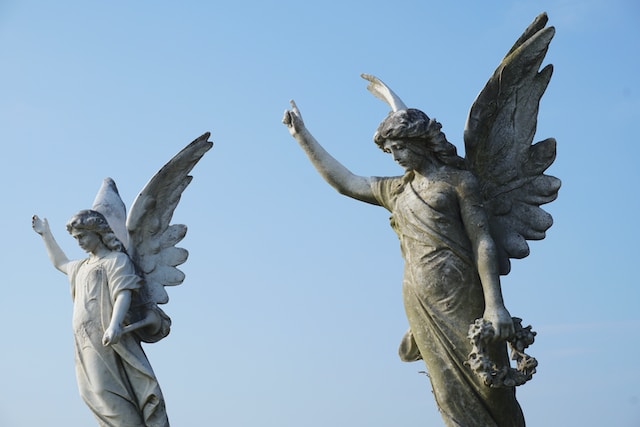
In Christianity, there are nine orders of angels, each with its own specific purpose and function. The Seraphim, the highest order, is said to be closest to God and is associated with divine love and illumination. The Cherubim, the second order, is often depicted as guardians of the divine throne and is associated with knowledge and wisdom. The third order is the Thrones, which are said to represent God’s justice and authority. Other orders of angels include the Dominions, Virtues, Powers, Principalities, Archangels, and Angels.
In Islam, angels are believed to be created from light and possess great power and knowledge. There are four archangels in Islamic belief: Jibril (Gabriel), Mikail (Michael), Israfil, and Azrael. Jibril is considered the chief archangel and is associated with revelation and communication from God. Mikail is associated with the distribution of sustenance and blessings. Israfil is associated with blowing the trumpet to signal the Day of Judgment, and Azrael is associated with the separation of the soul from the body at death.
In Judaism, angels are often depicted as messengers or protectors and are associated with various aspects of divine power and knowledge. There are many different angels in Jewish tradition, each with its own unique purpose and function. Some of the most well-known angels in Jewish tradition include Michael, Gabriel, Uriel, Raphael, and Metatron.
In New Age spirituality and other modern spiritual movements, angels are often viewed as spiritual helpers or guides that can be called upon for assistance and guidance. They are believed to be able to help with a wide range of issues, from physical healing to emotional support to spiritual guidance.
While there is no widely recognized concept of “power angels,” the beliefs and teachings about angels in different spiritual traditions suggest that they possess great power and knowledge, and have specific roles or responsibilities. Angels are often depicted as messengers or intermediaries between humans and the divine, and are associated with various aspects of divine power and knowledge.
The concept of angels has been around for centuries and is a central part of many different spiritual traditions. In Christianity, for example, angels are often associated with the Christmas story, and are depicted as announcing the birth of Jesus to the shepherds in the fields. In Islam, the concept of angels is also central to the faith, with the archangel Jibril playing a key role in revealing the Quran to the prophet Muhammad. In Judaism, angels are often depicted as protectors and messengers, and are associated with various aspects of divine power and knowledge.
In conclusion, angels are an important part of many different spiritual traditions and are often depicted as messengers or intermediaries between humans and the divine. While there is no widely recognized concept of “power angels,” the beliefs and teachings about angels in different spiritual traditions suggest that they possess great power and knowledge, and have specific roles or responsibilities. Whether viewed as messengers, protectors, or guides, angels have been an important part of human spirituality for centuries, and continue to play a significant role in many people’s lives today.