When it comes to men’s haircuts, two popular styles that are often confused are the taper and the fade. While these terms are sometimes used interchangeably, they actually refer to different techniques that barbers use to create specific looks. In this article, we’ll explain the differences between a taper vs fade, including what they are, how they’re achieved, and some popular variations of each style.
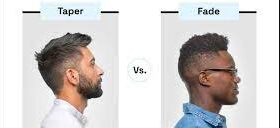
What is a taper?
A taper is a haircut where the hair gradually gets shorter as it goes down the sides and back of the head. This creates a natural, blended look that doesn’t have any harsh lines or sudden transitions. The hair on top of the head can be left longer or cut to a shorter length, depending on the desired style.
Tapers can be done with scissors or clippers, and barbers can use different clipper guards to achieve the desired length. A typical taper might start with a longer guard on the top of the head, such as a #5 or #6, and gradually work down to a shorter guard on the sides and back, like a #2 or #3. The hair around the ears and neckline is often tapered even shorter for a clean, polished finish.
Tapers can be customized to suit different hair types and styles. For example, a low taper might start lower on the head and create more of a contrast between the longer hair on top and the shorter sides. A high taper, on the other hand, might start higher up and blend more smoothly into the longer hair on top. Tapers can also be combined with other techniques, such as a side part or a textured top, to create a unique look.
What is a fade?
A fade is a haircut where the hair gradually gets shorter from the top of the head down to the sides and back. Unlike a taper, a fade creates a more dramatic contrast between the longer hair on top and the shorter hair on the sides. The transition from long to short hair is more defined, often with a clear line of demarcation between the two lengths.
Fades can be achieved with clippers or a straight razor, depending on the desired effect. The most common types of fades are the high fade, where the hair is shortest at the temples and gradually gets longer as it moves up the head, and the low fade, where the hair is shortest at the neckline and gradually gets longer as it moves up the head. There are also mid fades, which fall somewhere in between the high and low variations.
Fades can be combined with other styles, such as a buzz cut on top or a slicked-back look. They can also be customized with different clipper guards to create a unique look. For example, a skin fade is where the hair is tapered all the way down to the skin, while a shadow fade leaves a bit of stubble for a more textured finish.
Taper vs fade: what’s the difference?
The main difference between a taper and a fade is how they blend the hair from the longer top section to the shorter sides and back. A taper creates a more gradual transition, with no clear line of demarcation between the two lengths. A fade, on the other hand, creates a more dramatic contrast, with a clear line separating the longer hair on top from the shorter hair on the sides and back.
Another difference is the length of the hair at the bottom. With a taper, the hair on the sides and back is usually left longer than with a fade. This creates a more natural, blended look that’s suitable for a wide range of styles. With a fade, the hair on the sides and back is usually cut very short or even shaved down to the skin. This creates a more defined, edgy look that’s often paired with a shorter style on top.