According to current scientific knowledge and theories, there is no known object or entity that surpasses the size of the universe. The universe is an extensive and intricate system that includes everything we can observe, such as stars, planets, galaxies, matter, and energy. Its observable diameter is approximately 93 billion light-years, indicating that it would take light 93 billion years to travel from one end of the universe to the other. Although the universe is assumed to be larger than what we can observe, it is finite, implying that it has a boundary.
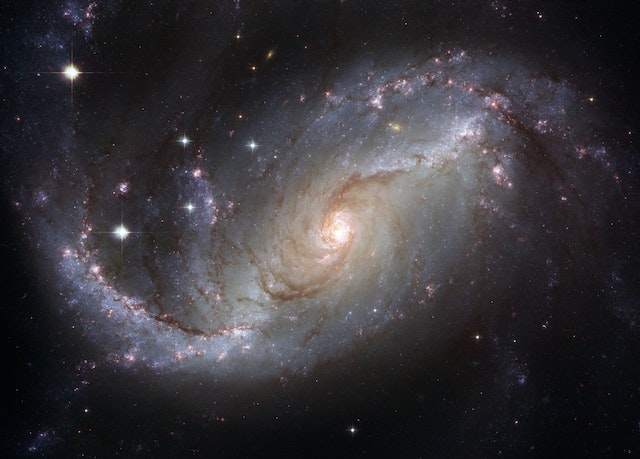
The universe is thought to have a specific shape, and it is currently expanding, which implies that it is getting larger, but it still has a limit. Beyond a specific distance, the light from entities has not had enough time to reach us yet due to the universe’s expansion, implying that there could be a significant amount of the universe that we cannot observe.
Philosophical and spiritual beliefs, on the other hand, propose the possibility of entities beyond the universe that are larger or greater than it. The idea of a multiverse, for instance, postulates the existence of numerous parallel universes, each with its unique set of physical laws and properties. While this theory is still a matter of debate among physicists, it has the potential to solve some of the universe’s puzzles, such as the fine-tuning of physical constants that allow life to exist.
In addition, some people believe in a divine creator or God who created the universe and is therefore superior to it. Nevertheless, this belief is not based on scientific evidence but on faith and personal experience.
To sum up, according to current scientific knowledge, there is no known object or entity that exceeds the universe’s size. However, philosophical and spiritual beliefs suggest the existence of entities beyond the universe that are larger or greater than it, which is a matter of personal beliefs and experiences.