The concept of an “omega wolf” is a term that was popularized by a book called “The Wolf: Ecology and Behavior of an Endangered Species” by David Mech. Mech’s research on wolves in captivity showed that wolves in packs have a hierarchical social structure, with one alpha pair at the top, followed by beta wolves, and so on down the line. The omega wolf, according to Mech, is the lowest ranking wolf in the pack and often serves as a scapegoat for the rest of the pack.
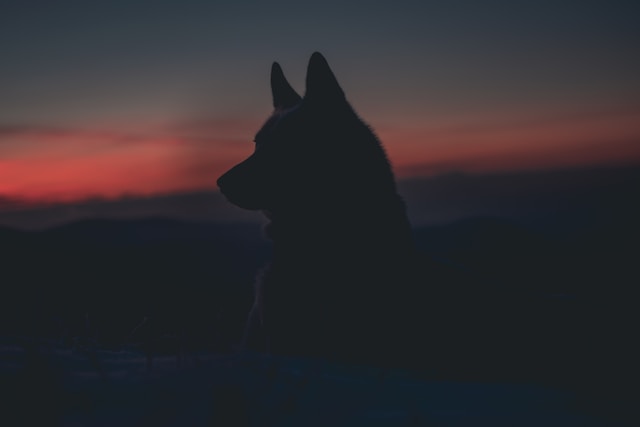
However, over time, Mech himself has come to question the validity of the concept of an omega wolf. He has stated that the idea of a completely submissive, low-ranking wolf that is constantly being picked on and bullied by the rest of the pack is not accurate. Instead, he now believes that wolves in the wild exhibit a more fluid social structure, with individuals moving in and out of different roles depending on the situation.
Despite this, the concept of the omega wolf has persisted in popular culture and even in some scientific literature. It is often used to refer to a wolf that is at the bottom of the social hierarchy, and is frequently harassed or excluded by the rest of the pack.
One thing that is important to understand about wolf packs is that they are not like human families. Wolves do not live in nuclear family units, with a mother and father and their offspring. Instead, they live in social groups that are made up of several related individuals, as well as unrelated wolves. These groups are not fixed, and individual wolves may come and go depending on a variety of factors.
Within these groups, there is a social hierarchy that is established through a combination of dominance displays, aggression, and submission. The alpha wolf is typically the most dominant individual in the group, and they are responsible for leading the pack and making decisions about where to hunt and when to move to a new territory.
Beneath the alpha are other wolves that are also dominant, but not quite as much so. These wolves are known as beta wolves. Below them are other wolves that are less dominant, and so on down the line. At the bottom of the hierarchy is the omega wolf.
The omega wolf is typically the wolf that is least dominant in the pack, and may be subject to harassment or exclusion from the rest of the group. However, it is important to note that the omega wolf is not always the same individual. Wolves may move up or down in the hierarchy depending on a variety of factors, such as their age, physical condition, or reproductive status.
Some researchers have suggested that the omega wolf serves an important role in the pack, despite their low status. For example, the omega wolf may act as a mediator in conflicts between other pack members, or may play an important role in caring for young pups. Additionally, the omega wolf may be more likely to take risks in order to find food or other resources, since they have less to lose than more dominant wolves.
It is also worth noting that the concept of an omega wolf is not universally accepted by all researchers who study wolves. Some scientists believe that the social structure of wolf packs is much more fluid and complex than a simple linear hierarchy, with individuals playing different roles depending on the situation.
In conclusion, while the concept of the omega wolf may be popular in popular culture, its validity as an accurate representation of wolf behavior in the wild is open to debate. While there is certainly a social hierarchy within wolf packs, the idea that there is a single individual who is constantly being picked on and excluded by the rest of the group is not necessarily accurate. Instead, the social dynamics of wolf packs are likely much more complex and fluid than we once thought, and individual wolves may play different roles depending on a variety of factors