The concept of hope is one that is inherently abstract, intangible, and difficult to grasp or define in a concrete way. Similarly, the color of hope is not something that can be easily pinned down or identified with a specific shade or hue. Rather, the color of hope is a subjective and highly individualized experience that can vary widely depending on the person and the circumstances in which they find themselves.
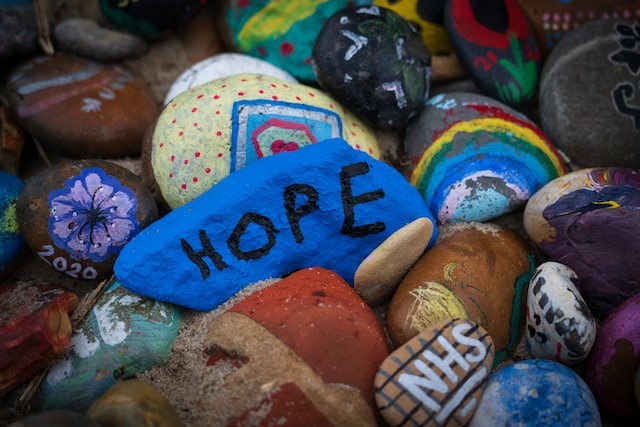
That being said, there are certain colors that are often associated with hope, optimism, and positivity in various cultures and contexts. These colors include green, yellow, blue, and white, among others.
One of the most commonly associated colors with hope is green. Green is the color of nature and growth, and it is often seen as a symbol of renewal, rebirth, and regeneration. In many cultures, green is also associated with luck, prosperity, and abundance, all of which can be seen as positive and hopeful traits. Furthermore, green is a calming and soothing color that can help to ease anxiety and promote a sense of tranquility, which can be important qualities for individuals who are experiencing difficult or uncertain times.
Another color that is often associated with hope is yellow. Yellow is a bright and cheerful color that is often seen as a symbol of happiness, optimism, and positivity. It is also the color of the sun, which is a powerful symbol of life, warmth, and energy. In many cultures, yellow is associated with enlightenment, wisdom, and creativity, all of which can be seen as hopeful and positive qualities.
Blue is another color that is often associated with hope. Blue is the color of the sky and the ocean, and it is often seen as a symbol of calm, serenity, and stability. It can also be associated with trust, loyalty, and dependability, all of which can be seen as positive and hopeful traits. In addition, blue is often used to represent communication, which can be an important factor in maintaining hope and optimism in difficult times.
White is another color that is often associated with hope. White is the color of purity, innocence, and clarity, and it is often seen as a symbol of new beginnings and fresh starts. In many cultures, white is also associated with spirituality and transcendence, which can be important factors in maintaining a sense of hope and optimism in the face of adversity.
Of course, these are just a few examples of the many colors that can be associated with hope, and the meaning of each color can vary widely depending on the context and the individual. Ultimately, the color of hope is a highly subjective and personal experience that can be shaped by a variety of factors, including cultural traditions, personal beliefs, and individual experiences.
In some cases, the color of hope may not even be a physical color at all, but rather a feeling or an emotion that is difficult to describe or define in words. For example, the feeling of hope may be associated with a sense of lightness, warmth, or energy that is not necessarily tied to a specific color or visual image.
In the end, the color of hope is ultimately a matter of personal interpretation and experience. While certain colors may be commonly associated with hope and optimism in various cultures and contexts, the true meaning of hope is something that can only be defined by each individual. Whether it is the green of new growth, the yellow of a sunny day, the blue of a calm sea, or the white of a fresh start, the color of hope is ultimately whatever brings us comfort, peace, and a sense of possibility in the face of life’s challenges.