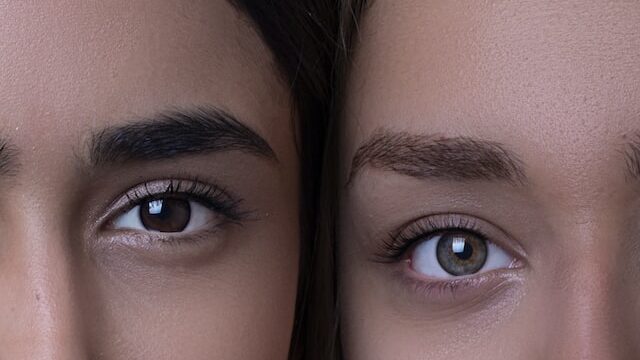
With that said, it is common for people to attempt to distinguish between the physical features of people from China and Japan. One of the most frequently cited differences is the shape of the eyes. However, it is important to note that there is actually no genetic or biological difference in the shape of eyes between people from China and Japan. Any perceived differences in eye shape are largely due to cultural and societal factors, such as makeup trends and cultural beauty standards.
Historically, in both China and Japan, large, round eyes have been considered a desirable feature for women. In China, the “double eyelid” or “parallel eyelid” is considered to be a desirable trait. This refers to the presence of a visible crease in the upper eyelid that makes the eye appear larger and more open. This feature is more common among East and Southeast Asians, including those from China, Korea, and Japan, but not all individuals from these regions have double eyelids. Many individuals choose to undergo cosmetic surgery to create the appearance of a double eyelid.
In Japan, a similar preference for large, round eyes exists. However, the ideal eye shape is slightly different. In Japan, a small amount of skin covering the inner corner of the eye is considered desirable. This is known as the “inner fold” or “epicanthal fold.” This feature is more common among individuals of East Asian descent, including those from Japan, Korea, and China. However, not all individuals from these regions have an inner fold, and it is not unique to people of East Asian descent.
It is also worth noting that eye shape can be influenced by other factors, such as age and facial structure. As individuals age, the skin around the eyes can become thinner and looser, causing the eyes to appear smaller and more sunken. Additionally, differences in facial structure can affect the shape and position of the eyes, making them appear larger or smaller, rounder or more almond-shaped.
In conclusion, any perceived differences between “Chinese eyes” and “Japanese eyes” are largely due to cultural and societal factors, such as makeup trends and cultural beauty standards, rather than genetic or biological differences. Furthermore, it is important to recognize that not all individuals from China or Japan have the same physical features, and any generalizations made about the physical features of people from these regions should be taken with caution