In Japanese, the word for moon is “月” (tsuki). This word has a long history and deep cultural significance in Japan, appearing in poetry, art, and folklore throughout the centuries.
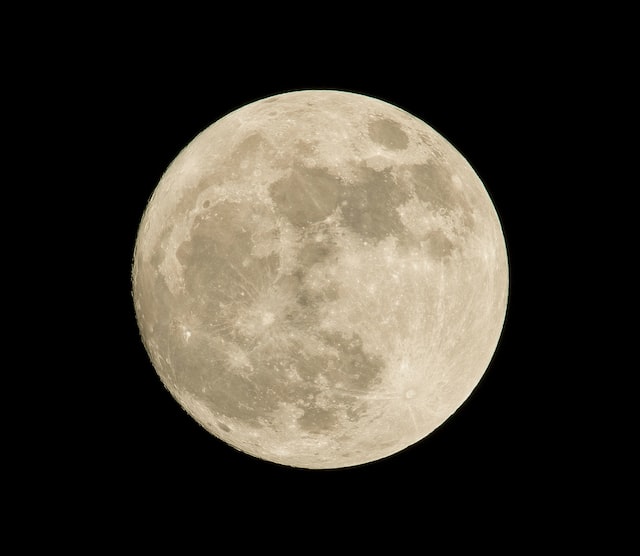
The Japanese word “tsuki” is written using the kanji character for moon, which consists of two parts. The top part of the character represents the shape of the moon, while the bottom part represents a field or a flat surface. This character is used in various words related to the moon, such as “月光” (gekkou) which means moonlight, and “月面” (getsumen) which means the surface of the moon.
The moon has been an important cultural symbol in Japan for centuries. In ancient times, the lunar calendar was used to track the passage of time, and many traditional Japanese festivals are still based on the lunar calendar. For example, the harvest festival of “Tsukimi” (moon-viewing) is held on the night of the full moon in September or October, when people gather to appreciate the beauty of the moon and eat traditional foods such as rice cakes and chestnuts.
In Japanese folklore and mythology, the moon is often associated with female deities and characters. One of the most famous is the goddess “Tsukuyomi”, who was believed to be the god of the moon and ruler of the night. According to legend, Tsukuyomi was created when the god Izanagi washed his face after returning from the underworld, and was tasked with governing the night and the tides. Other female figures associated with the moon include “Kaguya-hime”, the legendary princess who came from the moon, and the “Moon Rabbit” who is said to live on the moon and pound rice cakes.
In Japanese literature and poetry, the moon is a common theme, and is often used as a metaphor for beauty, transience, and melancholy. The famous Japanese poet Matsuo Basho wrote many haiku about the moon, such as:
古池や 蛙飛びこむ 水の音
(Furuike ya kawazu tobikomu mizu no oto)
This haiku, which translates to “An old pond / A frog jumps in / The sound of water”, describes a peaceful scene of nature where the moon is reflected in a pond. The image of the moon reflected in water is a common motif in Japanese poetry, and is often used to convey a sense of impermanence and the fleeting nature of life.
In Japanese art, the moon is also a popular subject, and has been depicted in many different forms over the centuries. One of the most famous examples is the woodblock print series “Tsukioka Yoshitoshi’s One Hundred Aspects of the Moon”, which depicts various scenes and characters associated with the moon. Another famous example is the painting “The Great Wave off Kanagawa” by Hokusai, which features a large full moon in the background.
In modern Japanese culture, the moon continues to be a significant symbol, appearing in various forms of media such as anime, manga, and video games. The moon is often used as a visual motif to create a sense of mystery or otherworldliness, and is sometimes depicted as having supernatural powers or significance.
In conclusion, the Japanese word for moon is “月” (tsuki), a character that has deep cultural significance and has been used throughout history in various forms of art, literature, and folklore. The moon continues to be an important symbol in modern Japanese culture, and is a source of inspiration for many artists and write