The largest ant that ever lived is known as Titanomyrma gigantea. This extinct species lived during the Eocene epoch, approximately 50 million years ago. Titanomyrma gigantea was discovered in Germany in the 1990s, and since then, scientists have been studying its characteristics and behavior to better understand the world of giant ants.
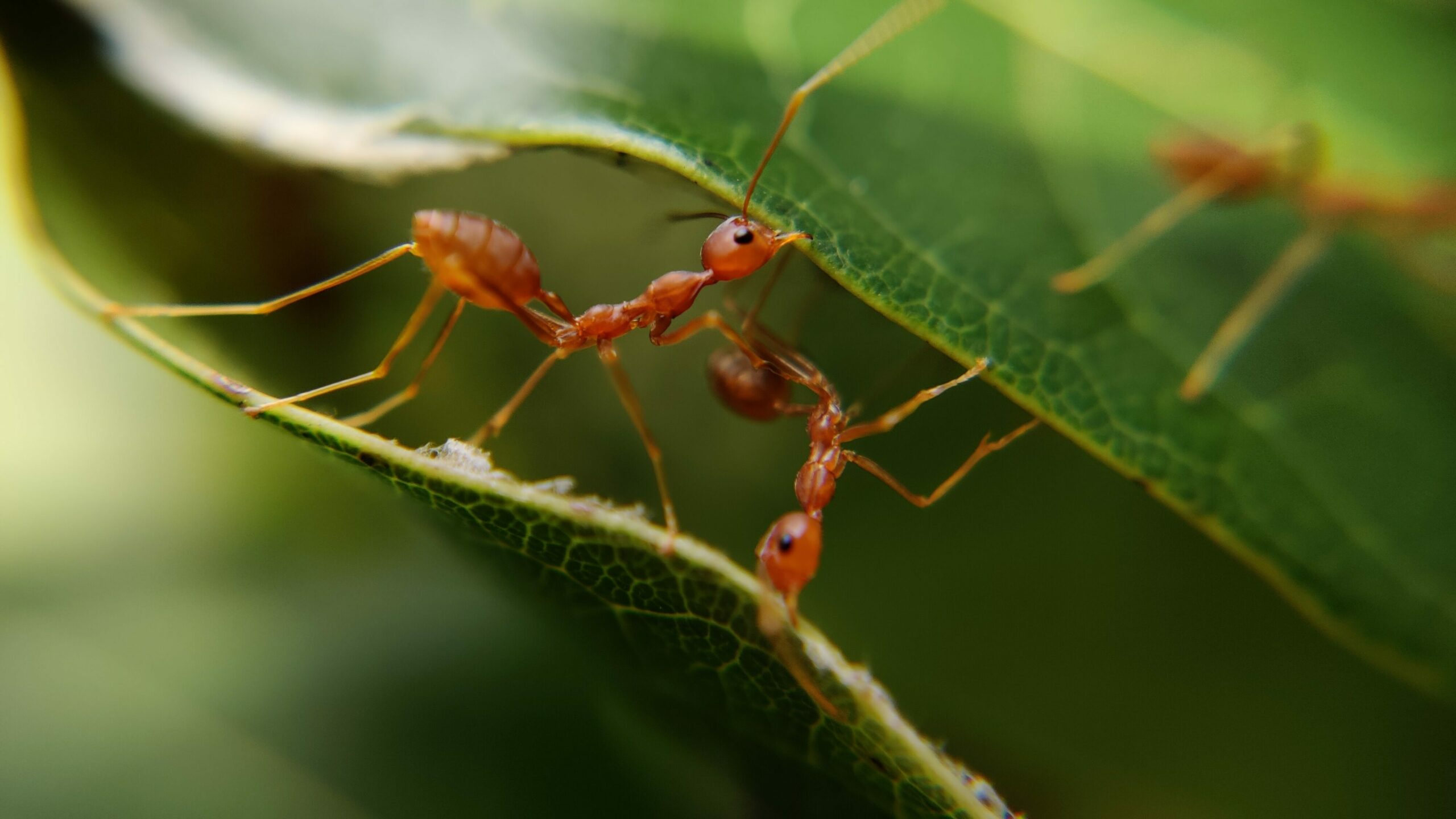
Titanomyrma gigantea was a member of the family Formicidae, which includes all modern-day ants. However, this prehistoric ant was much larger than any species that exists today, with queens measuring up to 6 centimeters (2.4 inches) in length and workers measuring up to 3 centimeters (1.2 inches) in length. These sizes are significantly larger than the largest extant ant species, which typically measure less than 2 centimeters (0.8 inches) in length.
The discovery of Titanomyrma gigantea has given scientists important insights into the evolution of ants. Before this species was discovered, it was believed that the largest ants had existed during the Cretaceous period, which ended about 66 million years ago. Titanomyrma gigantea proves that giant ants also existed during the Eocene epoch, which is much closer to the present day. This suggests that the evolution of ants towards larger sizes occurred over a much longer period of time than previously thought.
One of the most remarkable features of Titanomyrma gigantea was its wingspan. The queens of this species had wings that measured up to 15 centimeters (5.9 inches) in length. This is more than double the wingspan of any extant ant species. The wings of Titanomyrma gigantea were used for dispersal, allowing the queens to travel long distances to start new colonies.
In addition to its large size, Titanomyrma gigantea had several other unique characteristics. This species had a large head and strong mandibles, which would have allowed it to capture and kill large prey. The workers of Titanomyrma gigantea likely performed a variety of tasks, including foraging, nest construction, and caring for the queen and brood.
Despite its size, Titanomyrma gigantea was not the apex predator of its time. Fossil evidence suggests that there were other insects that were even larger, such as dragonflies with wingspans of up to 70 centimeters (27.6 inches). These giant insects were likely part of a complex ecosystem in which different species competed for resources and preyed on each other.
The discovery of Titanomyrma gigantea has also shed light on the evolution of social behavior in ants. Modern-day ants are known for their complex social structures, in which individuals work together to care for the queen and brood, defend the colony, and forage for food. It is likely that Titanomyrma gigantea had a similar social structure, although the details are still unknown.
One possibility is that Titanomyrma gigantea had a caste system, with queens, workers, and soldiers performing different tasks. The queens would have been responsible for reproduction, while the workers would have performed a variety of tasks, such as foraging and caring for the queen and brood. The soldiers, with their strong mandibles, would have defended the colony from predators.
However, it is also possible that Titanomyrma gigantea had a less complex social structure than modern-day ants. It is even possible that this species was solitary, with individuals living and foraging on their own.
In conclusion, the largest ant that ever lived is believed to be Titanomyrma gigantea, an extinct species that lived approximately 50 million years ago. This prehistoric ant was significantly larger than any modern-day ant, with queens measuring up to 6 centimeters (2.4 inches) in length and workers measuring up to 3 centimeters (1.2 inches) in length. Titanomyrma gigantea had a unique set of characteristics, including a large head and strong mandibles that would have allowed it to capture and kill large prey, and wings that could measure up to 15 centimeters (5.9 inches) in length, which were used for dispersal. The discovery of Titanomyrma gigantea has given scientists important insights into the evolution of ants and their role in ecosystems throughout history. Further study of this prehistoric ant may provide even more insight into the evolution of social behavior in ants and the complex ecosystems in which they lived.