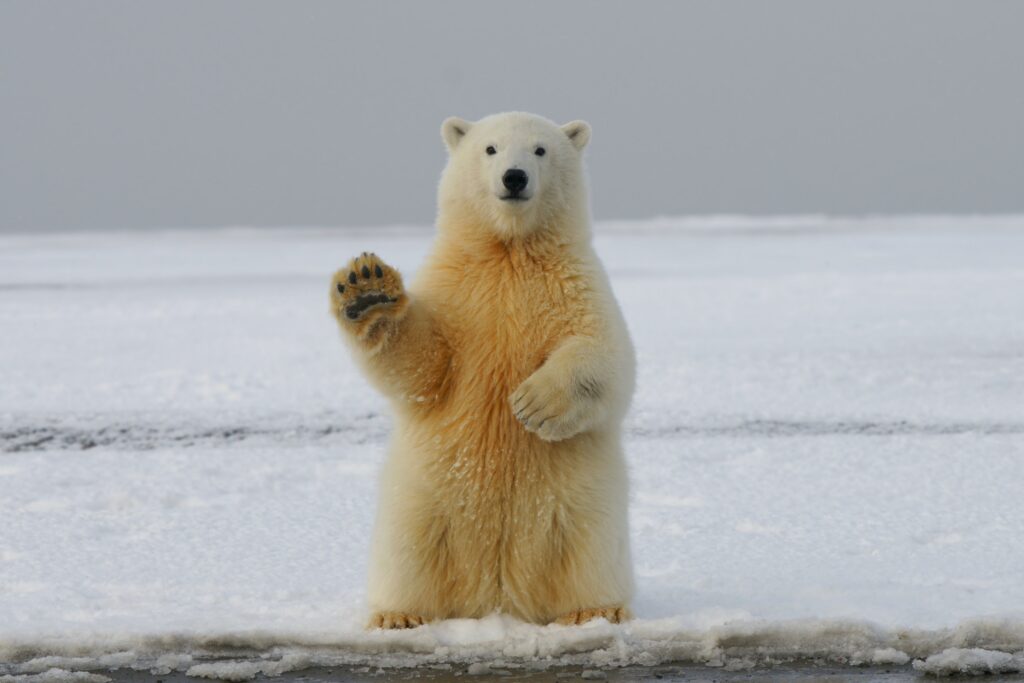
The largest bear alive today is the polar bear (Ursus maritimus), also known as the sea bear. Polar bears are found in the Arctic region, primarily in Canada, Greenland, Norway, Russia, and the United States (Alaska).
Size and Weight:
Polar bears are one of the largest carnivores in the world and can weigh up to 1500 pounds (680 kg) for males and 550-1100 pounds (250-500 kg) for females. They can stand up to 10 feet tall (3 meters) on their hind legs, and their nose-to-tail length can be up to 9 feet (2.7 meters).
Physical Characteristics:
Polar bears have several adaptations that allow them to survive in their harsh Arctic environment. They have thick fur that provides insulation against the cold, and their skin is black to absorb the sun’s rays. Their large, padded paws help them walk on ice and snow, and their sharp claws are used for catching prey and climbing.
Diet:
Polar bears are apex predators and feed primarily on seals, although they will also eat fish and other marine mammals. They use their sense of smell to locate breathing holes in the ice, where they wait for seals to surface. They also hunt seals by swimming under the ice and pulling them out of the water.
Conservation Status:
Polar bears are currently classified as a vulnerable species by the International Union for Conservation of Nature (IUCN) due to climate change, hunting, and other human activities that threaten their habitat and food sources. The loss of sea ice is particularly concerning for polar bears, as they rely on it for hunting and breeding.
Conclusion:
In conclusion, the polar bear is the largest bear alive today, with males weighing up to 1500 pounds and standing up to 10 feet tall. They are well adapted to their Arctic environment and are apex predators that feed primarily on seals. However, polar bears are currently facing threats from climate change and human activities, and conservation efforts are necessary to protect their habitat and ensure their survival.