Depositing checks through automated teller machines (ATMs) has become a common and convenient way for people to add money to their bank accounts. However, there are limitations on the size of checks that can be deposited in ATMs.
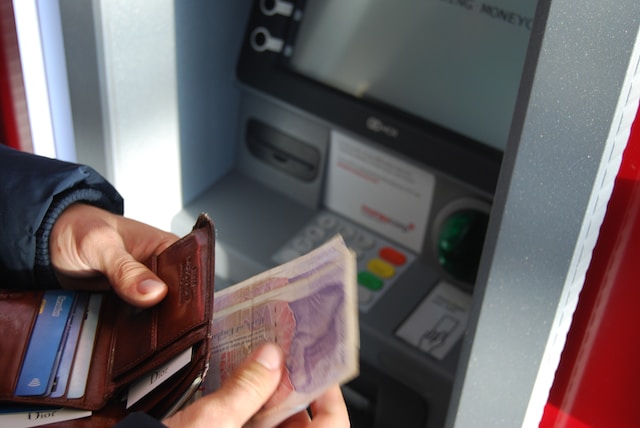
The specific limits on the amount of money that can be deposited in an ATM will depend on several factors, including the bank that owns the machine, the type of account held by the depositor, and the amount of money available in that account.
For example, some banks may permit customers to deposit checks up to $10,000 in their ATMs, while others may limit deposits to $5,000. Accounts with higher balances or business accounts may be granted higher ATM deposit limits.
In addition, there are federal regulations that can impact the size of checks that can be deposited in an ATM. For instance, under the Bank Secrecy Act, banks are required to report any deposits exceeding $10,000 to the federal government. Therefore, even if a bank permits deposits of larger checks, they may still require additional documentation and reporting.
When depositing checks in an ATM, customers will typically need to endorse the check by signing the back and follow the instructions provided by the machine. Some ATMs may also allow deposits through scanning the check using a smartphone.
To deposit a large check, it is best to confirm the bank’s ATM deposit limits and requirements ahead of time. Preparing the deposit by ensuring that the check is properly endorsed and all necessary slips or envelopes are available will also help to make the process go smoothly.
In conclusion, the maximum amount of money that can be deposited in an ATM depends on several factors, including the policies of the bank, the account type, and the amount of funds available in the account. Banks may have different ATM deposit limits, and federal regulations may require additional documentation and reporting for deposits exceeding $10,000. Depositing checks in an ATM can be a convenient way to add funds to a bank account, but it is important to check with the bank ahead of time to determine the deposit limit and follow all necessary procedures.