Eye color is determined by the amount and type of pigments in the iris, the colored part of the eye. The most common eye colors worldwide are brown, blue, green, and gray, with variations and combinations of these colors. However, there are some eye colors that are considered rare, and the rarest eye color is believed to be amber.
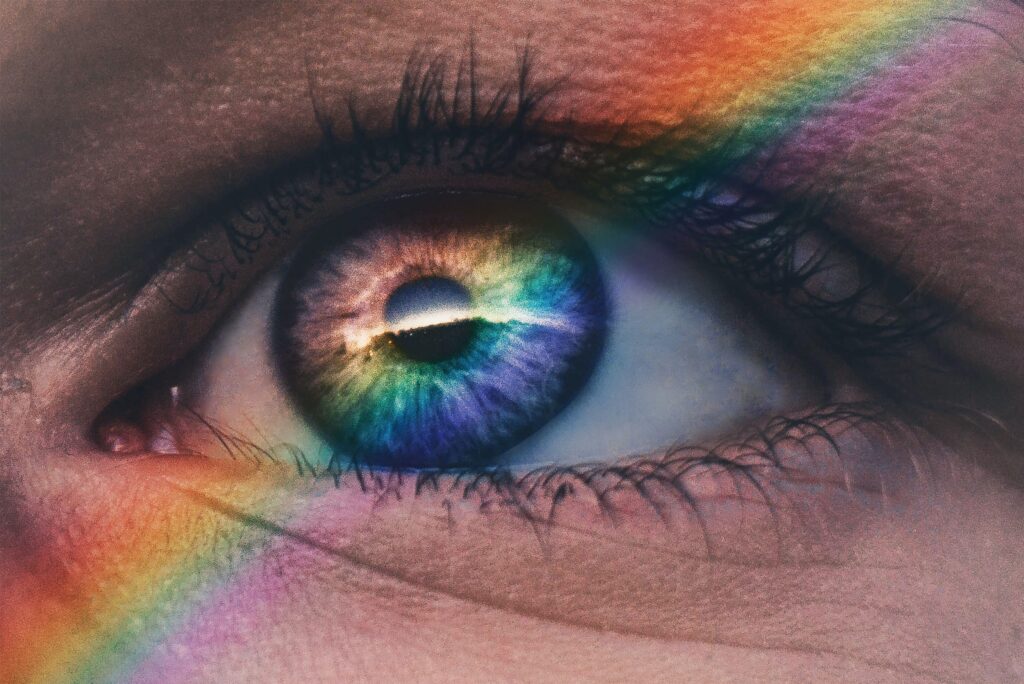
Amber eyes are a golden or yellowish-brown color, often with flecks of green or orange. They are more common in animals than in humans, but some people do have amber-colored eyes. Amber eyes are believed to be a result of a low level of melanin in the iris, combined with a yellow or orange pigment called lipochrome.
Another rare eye color is green. Only about 2% of the world’s population has green eyes, which are caused by a combination of low melanin levels and a yellow or blue reflection of light in the iris. Green eyes are more common in people of European descent, particularly those with Celtic or Scandinavian ancestry.
Heterochromia, a condition where the two eyes have different colors, is also rare. Complete heterochromia, where one eye is a completely different color than the other, is estimated to occur in only about 1 in 10,000 people. Partial heterochromia, where one eye has a section of a different color, is more common.
Other rare eye colors include violet, red, and black. However, these colors are usually caused by certain medical conditions or genetic mutations, and are not natural eye colors.
It is important to note that eye color is a complex trait, and there is still much that researchers do not understand about how it is determined. Some studies suggest that as many as 16 different genes may be involved in determining eye color, and that multiple factors, including genetics, environment, and chance, may play a role.
In summary, while there are some eye colors that are considered rare, such as amber and green, it is difficult to determine which is the rarest, as eye color is a complex trait with many variations and combinations.