Sharks are a diverse group of fish that inhabit various aquatic environments, from shallow coastal waters to the deep sea. The depth of water that sharks can swim in depends on several factors, including their size, behavior, and species.
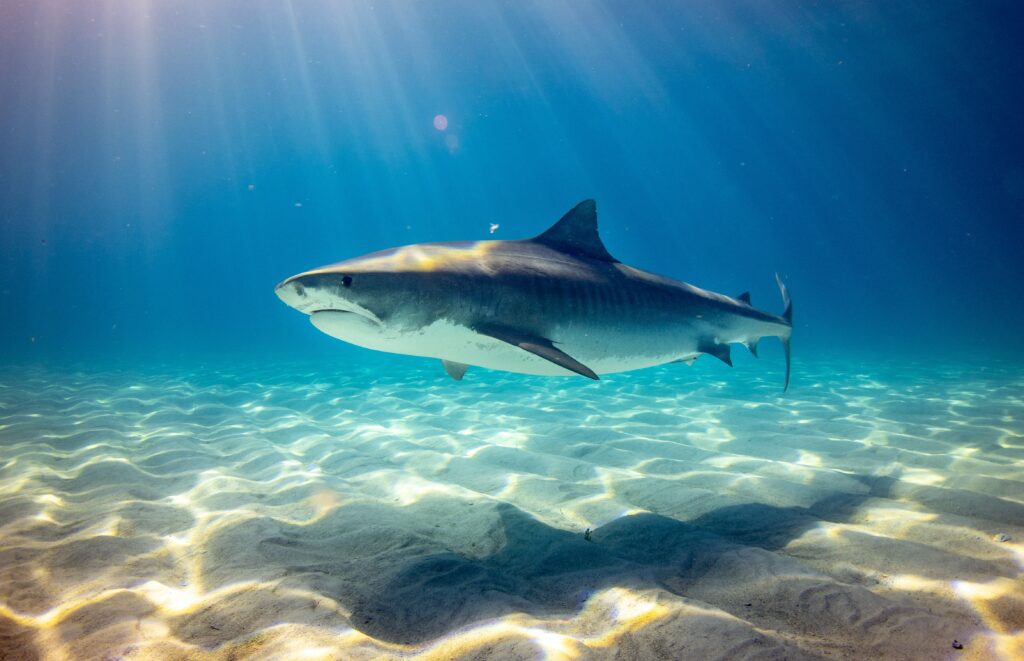
The size and shape of sharks can have a significant impact on the depth of water they can swim in. Larger sharks, such as great whites, tend to inhabit deeper waters, while smaller sharks, such as the spiny dogfish, can thrive in shallower areas.
Behavior also plays a role in determining the depth at which sharks can swim. Some species, like the blacktip reef shark, are adapted to shallow water and can be found in waters only a few feet deep. Other species, like the blue shark, are better suited to deeper waters and can inhabit areas up to 1,000 feet deep.
The physiology of sharks can also limit the depth at which they can swim. Sharks are cold-blooded animals, and their body temperature is regulated by the temperature of the water they are in. As a result, some species, like hammerhead sharks, are unable to survive in water that is too cold.
The shape and design of a shark’s body can also affect the depth at which it can swim. Sharks have streamlined bodies and powerful fins that allow them to swim efficiently through the water. However, this design is not well-suited to swimming in very shallow water, where the bottom of the water can create drag and slow the shark down.
In summary, the shallowest water a shark can swim in depends on various factors, including the species of shark, its size, behavior, physiology, water temperature, and bottom structure. Despite these limitations, sharks are adaptable creatures that can survive and thrive in a wide range of aquatic environments.