The shortest color is not a relevant or useful concept when discussing the topic of color. Colors are defined based on the wavelengths of light that an object reflects or emits. The range of these wavelengths can vary from the longest, which appears as red to the human eye, to the shortest, which appears as violet.
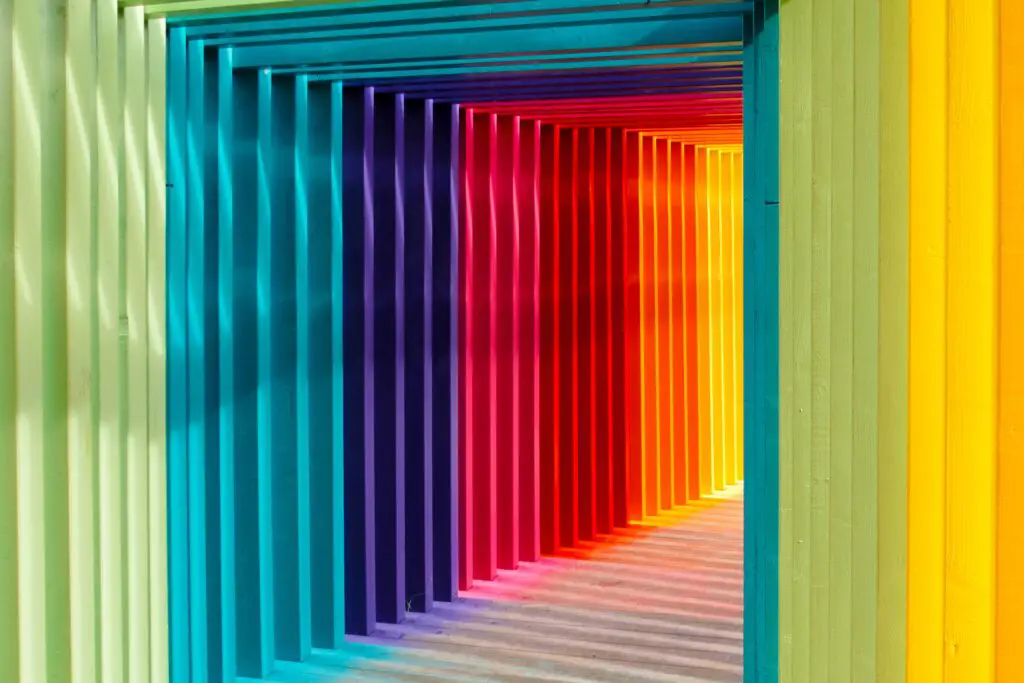
In the visible light spectrum, red light has the longest wavelength of approximately 700 nanometers, while violet light has the shortest wavelength of around 400 nanometers. Other colors of the spectrum, arranged in order from the longest to the shortest wavelength, include orange, yellow, green, blue, and indigo.
It’s essential to note that several colors exist outside the visible light spectrum, such as ultraviolet and infrared, which we cannot perceive with the naked eye. These colors have even shorter and longer wavelengths than violet and red, respectively.
When we talk about the color of an object, we’re actually referring to the wavelengths of light that the object either reflects or absorbs. For instance, a red apple appears red because it absorbs all colors of light except for red, which reflects back to our eyes. On the other hand, a blue object appears blue because it absorbs all colors of light except blue.
In summary, the concept of the shortest color is not a meaningful one since color is defined by the range of wavelengths of light, which is continuous and ranges from the longest to the shortest. The shortest wavelength visible to the naked eye appears as violet.