Chemical bonds are the forces that hold atoms together in molecules, ions, and solids. There are three main types of chemical bonds: ionic bonds, covalent bonds, and metallic bonds. Each of these bonds has its own unique properties, strengths, and weaknesses.
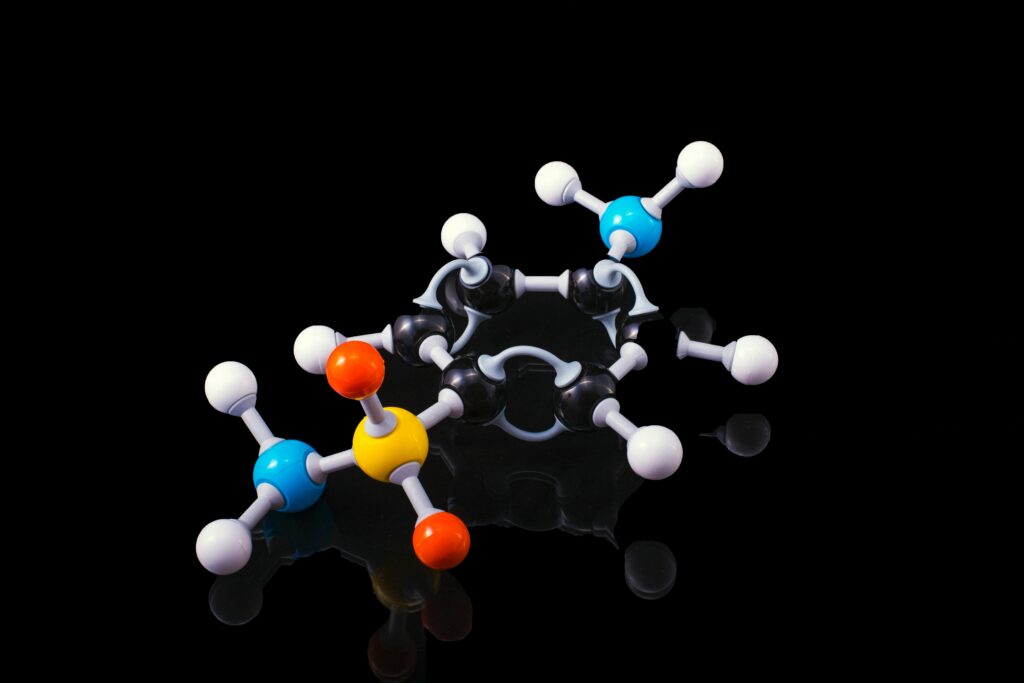
The strongest type of bond is the covalent bond, which involves the sharing of electrons between atoms. Covalent bonds are strong because they involve the sharing of electrons between atoms, which creates a strong attractive force between the atoms. The strength of a covalent bond depends on the electronegativity difference between the two atoms involved in the bond. If the electronegativity difference is large, the bond will be stronger. For example, the bond between carbon and oxygen in carbon dioxide is very strong because the electronegativity difference between the two atoms is large.
Covalent bonds can be further categorized into two types: polar and nonpolar. Polar covalent bonds occur when the electrons in the bond are shared unequally between the atoms. This results in one end of the molecule having a partial negative charge and the other end having a partial positive charge. Nonpolar covalent bonds occur when the electrons in the bond are shared equally between the atoms. The strength of a covalent bond also depends on the bond length, with shorter bond lengths resulting in stronger bonds.
The weakest type of bond is the van der Waals bond, which includes London dispersion forces, dipole-dipole forces, and hydrogen bonding. These forces are also known as intermolecular forces, as they occur between molecules rather than within a molecule. Van der Waals forces are weak because they involve temporary dipoles that arise from the movement of electrons within a molecule. These forces are strongest between large molecules with many electrons, such as long-chain hydrocarbons and polymers.
London dispersion forces are the weakest of the van der Waals forces and occur between all molecules, regardless of polarity. These forces arise from the movement of electrons within a molecule, which can create a temporary dipole that induces a dipole in a neighboring molecule. Dipole-dipole forces occur between polar molecules and result from the attraction between the partial positive and partial negative ends of the molecules. Hydrogen bonding is a special type of dipole-dipole force that occurs between molecules containing hydrogen atoms bonded to highly electronegative atoms such as oxygen, nitrogen, or fluorine. Hydrogen bonding is the strongest of the van der Waals forces.
Ionic bonds are another type of strong bond that result from the electrostatic attraction between ions with opposite charges. In an ionic bond, one atom donates an electron to another atom, resulting in the formation of a positively charged cation and a negatively charged anion. The strength of an ionic bond depends on the magnitude of the charge on the ions and the distance between them. The larger the charge on the ions and the closer they are together, the stronger the bond will be.
Metallic bonds are also strong and occur between atoms in a metallic lattice. In a metallic bond, the outer electrons of the atoms are shared between all the atoms in the lattice, creating a strong attraction between the atoms. The strength of a metallic bond depends on the number of valence electrons in the atoms and the size of the metallic ions.
In summary, the strongest type of bond is the covalent bond, which involves the sharing of electrons between atoms. Covalent bonds can be further categorized into polar and nonpolar bonds, with polar bonds being stronger than nonpolar bonds. The weakest type of bond is the van der Waals bond, which includes London dispersion forces, dipole-dipole forces, and hydrogen bonding. Ionic bonds and metallic bonds are also strong .