Swinging is a physical activity that involves moving back and forth on a suspended object, such as a swing or a hammock. The motion of swinging can represent different things in different contexts, including relaxation, playfulness, nostalgia, freedom, and even danger. As such, the symbol for swinging can take on various meanings and interpretations depending on the cultural, social, and personal context.
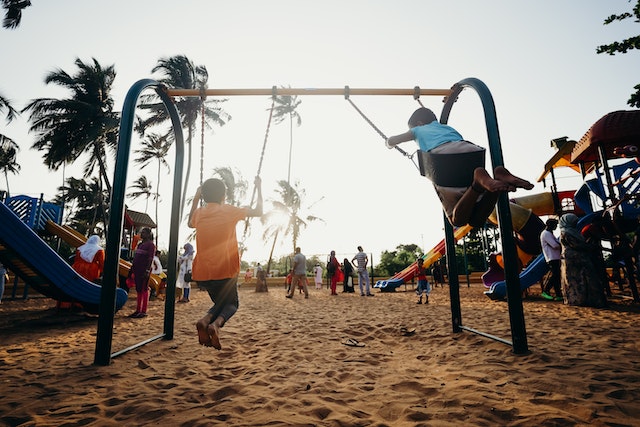
One of the most common symbols for swinging is the swing itself, which is a suspended seat that can move back and forth on ropes or chains attached to a frame or a tree. The swing can represent childhood memories, innocence, joy, and carefreeness, as it is often associated with playgrounds, parks, and summer vacations. In literature and art, the swing has been used as a motif to convey themes of love, romance, and seduction, as in the famous painting “The Swing” by Jean-Honoré Fragonard.
Another symbol for swinging is the pendulum, which is a weight suspended from a fixed point that swings back and forth in a regular motion. The pendulum can represent the passage of time, the inevitability of change, and the balance between opposing forces. In physics and metaphysics, the pendulum has been used to explain phenomena such as gravity, energy, and consciousness, as in the theory of the swinging pendulum as a divination tool.
A third symbol for swinging is the trapeze, which is a suspended bar or rope that acrobats use to perform daring stunts and aerial maneuvers. The trapeze can represent risk-taking, daring, and mastery of one’s body and mind. In circus and performance arts, the trapeze has been used to showcase feats of strength, agility, and grace, as in the famous Cirque du Soleil show “Swing” that combines acrobatics, music, and dance.
A fourth symbol for swinging is the hammock, which is a suspended bed or chair that allows one to rest or nap in a comfortable and relaxing position. The hammock can represent leisure, solitude, and introspection, as it provides a peaceful and private space to unwind and recharge. In tropical and coastal regions, the hammock has been used as a cultural icon and a symbol of the good life, as in the Caribbean tradition of “siesta” or afternoon nap.
A fifth symbol for swinging is the chandelier, which is a suspended light fixture that hangs from the ceiling and can sway gently or dramatically depending on its design and weight. The chandelier can represent elegance, luxury, and opulence, as it is often associated with grandiose mansions, ballrooms, and theaters. In art and architecture, the chandelier has been used to create a sense of drama and spectacle, as in the crystal chandeliers of the Palace of Versailles or the glass sculptures of Dale Chihuly.
A sixth symbol for swinging is the tree, which is a natural object that provides support and stability for swings, hammocks, and other suspended objects. The tree can represent nature, growth, and resilience, as it is a living organism that adapts to changing environments and seasons. In mythology and folklore, the tree has been used to symbolize the connection between humans and the divine, as in the Norse tree of life Yggdrasil or the Celtic tree of knowledge.
In conclusion, the symbol for swinging can take on different forms and meanings depending on the context and perspective. Whether it is a swing, a pendulum, a trapeze, a hammock, a chandelier, or a tree, swinging can represent a wide range of emotions, values, and experiences. By understanding the symbolism of swinging, we can appreciate the significance of this simple yet profound activity in our lives and culture.