The world’s strongest material is a topic of ongoing scientific research and debate. Several materials have been suggested to be the strongest, each with its unique properties and potential applications. In this article, we will explore some of the strongest materials known to science.
- Graphene Graphene is a one-atom-thick layer of graphite that has remarkable strength and conductivity. It is made up of carbon atoms arranged in a hexagonal lattice, and it is 200 times stronger than steel while being incredibly lightweight. Its exceptional strength comes from the strong covalent bonds between its carbon atoms, which give it a tensile strength of over 130 gigapascals (GPa). Graphene is also highly flexible, making it an attractive material for applications such as flexible electronics and sensors.
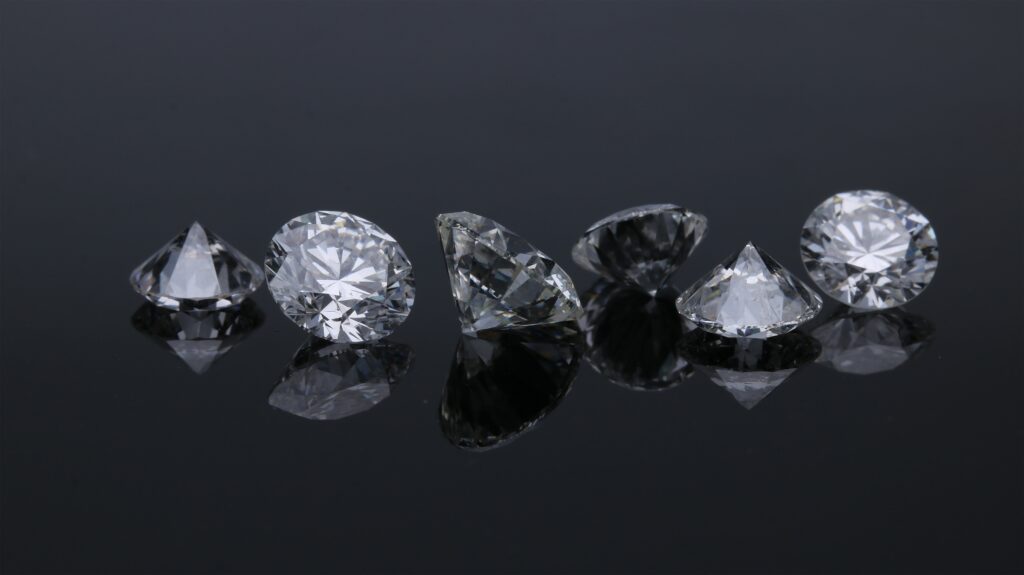
- Diamond Diamond is the hardest natural material on Earth, with a score of 10 on the Mohs hardness scale. It is composed of carbon atoms arranged in a crystal lattice structure, giving it excellent strength and resistance to wear and abrasion. Its compressive strength is estimated to be around 130 GPa, which makes it highly resistant to deformation and cracking. Diamonds are used in various applications, including jewelry, cutting tools, and industrial drilling equipment.
- Carbon nanotubes Carbon nanotubes are cylindrical structures made of carbon atoms that are just one nanometer in diameter. They are exceptionally strong and lightweight, with a tensile strength of up to 63 GPa. Their unique properties make them an attractive material for various applications, including electronics, energy storage, and composite materials.
- Wurtzite boron nitride Wurtzite boron nitride is a synthetic material made up of boron and nitrogen atoms arranged in a crystal lattice structure. It is the second-hardest material on Earth, with a score of 9.3 on the Mohs hardness scale. Its exceptional strength comes from the strong covalent bonds between its atoms, which give it a tensile strength of up to 77 GPa. Wurtzite boron nitride has potential applications in electronics, optics, and high-temperature materials.
- Carbyne Carbyne is a theoretical material made up of carbon atoms bonded in a linear chain. It is the strongest material known to science, with a tensile strength of over 100 GPa. However, it has not yet been synthesized due to its extreme instability, and its properties are still mostly theoretical. Researchers are working to develop ways to synthesize carbyne and explore its potential applications, including in high-strength materials, electronics, and energy storage.
In conclusion, the world’s strongest material is a topic of ongoing research and debate, and several materials have been suggested to be the strongest. Graphene, diamond, carbon nanotubes, wurtzite boron nitride, and carbyne are some of the strongest materials known to science, each with its unique properties and potential applications. As research continues in the field of materials science, it is likely that new materials with even greater strength and durability will be discovered.